he Yashica ME 1 is a small, compact 35mm viewfinder camera with auto-exposure, made in both Japan and Brazil by Yashica.
It was possibly the first camera produced in Brazil by the Yashica factory in Sorocaba Sao Paulo from 1977. Production in Japan appears to have been earlier,
The focus zone settings are visible in the viewfinder through a small square window, below the finder window. Behind the focus ring is an aperture ring - with an "A" setting for automatic and stops from f/2.8-16 for flash. Film advance is by a thumb-wheel on the lower left of the back.
The film speed is set using a ring around the lens, with a display just below. The CdS photocell is just above the lens, inside the filter thread - allowing the auto-exposure to compensate for filters.
The top plate carries the shutter release, hot shoe and frame counter. There is a lever for the self-timer on the front.
Lens: Yashica 38mm f/2.8; 4 element, 3 group. 46mm filter thread.
Focus: 4 Zones (1, 1.5, 3m and infinity) and feet/metres scales
Metering: CdS cell
Shutter: Copal auto, speed set by metering, 1/60-1/360 sec.
Filter Thread: 46mm
Flash: hot shoe
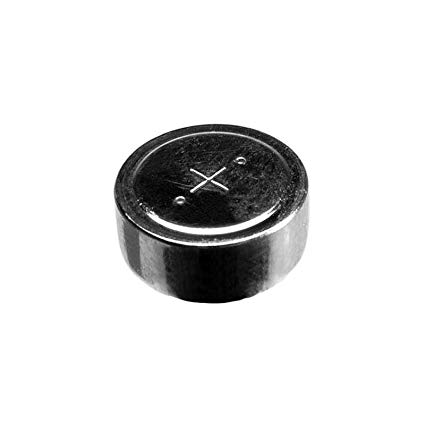
Power: PX76A/675A 1.35v mercury button cell. Now Defunct but modern solutions exist
ASA 25 -500 with DIN Equivalents in multiple steps
Production country on base
Yashica Minister D, manufactured around 1963 in Japan. This 35mm rangefinder camera has a Yashica Yashinon 5 elements in 4 groups 4.5cm f/2.8 lens, helical focus 2.6 ft to infinity, Copal-SVL shutter (speeds 1 to 1/500 sec + B, M,X, delay action) and an uncoupled CDS exposure meter. It has a parallax corrected viewfinder.
The Minister D accepts 46 mm screw-in filters and 48 mm push-on lens hoods.
The Yashica Minister D rangefinder camera was manufactured in Japan beginning around 1963. The main change from the Yashica Minister III was the new CdS meter cell mounted below the rewind crank. However the light meter remained uncoupled from the exposure settings on the lens barrel. The Minister 700 is a variant of the same camera but with a faster, f/1.7 lens.
The light meter indicator measures light from 3 to 17 LV. To determine the EV, the scale on the meter can be adjusted to match the film ISO.
The lens barrel has an LVS ring to set the exposure level. The ring has LV numbers from 2 to 17. Turning the LVS ring alone adjusts the aperture ring automatically to maintain the same exposure level, giving this camera a kind of shutter-priority mode. Reaching the minimum or maximum aperture will then automatically turn the shutter ring too.
Manufacturer: Yashica
Date of Production: circa 1963
Type of Camera: Rangefinder camera
Film type: 35mm film
Lens: Yashinon 45mm f/2.8, focus range 70cm-infinity
Shutter: Copal-SVL leaf shutter
Shutter speed range: self-timer delay, B, 1-1/500s
Viewfinder: eye-level rangefinder with parallax correction
Flash: cold shoe with PC socket, X and M sync modes
Exposure Modes: manual, quasi-shutter-priority
Exposure Metering: uncoupled CdS
Focusing: manual
Film advance: manual lever with double-exposure prevention
Battery: Mallory PX-13 or 625 button cell for light meter
Weight: 675g
The bug eyed Yashica "Minister" III morphed into the Minister [IV] Model D in 1964 [ as near as we can tell ]. As hard as we look, we can't find anything that's not to like on this camera. It may be the perfect choice for a photo / journalism student because the price is right and it comes "loaded". The dependable Yashica film transport serves to support the strictly mechanical Copal SVL shutter. The Yashinon 45mm ƒ2.8 lens has an angle of view of 56º. Yes, there are faster Yashinons out there, but the fact is that film emulsion speeds have increased to such a degree while the grain structure has actually been reduced since the introduction of these cameras, that ASA 100 film with the ƒ2.8 lens, may be all that you will ever need. The lens mount accepts 46mm screw-in accessories.
Let's leave the editorializing behind and see what make this camera tick.
User selectable shutter speeds are: B, 1, 2, 3, 4, 8, 15, 30, 60, 125, 250, 500. secs. The shutter can be set at M or X synch. One oddity is that the shutter must be set at X synch to use the self timer, regardless of whether you are using flash or not. A self timer with a nominal 8 sec delay is provided. The shutter button is threaded to accept a cable release. Electronic flash fires and synchs at any speed, great for exterior fill light.
The user selectable aperture ranges from ƒ16 to 2.8. Moving the aperture ring, changes the selected ƒ stop in step with the shutter speed dial.
To move only the ƒ stop, an extreme outer ring is provided. Changing the shutter speed is therefore a two step procedure. First move the Aperture and the Speed in tandem to the desired speed, then move the Aperture only to alter it's desired setting, using the outer ring. This might seem like a pain, but most of the time really speeds up any change you wish to make once the initial correct exposure has been determined.
The outer ring is numbered to coincide with the numbers on the Exposure Meter dial. Yashica's tried and true split image range-finder, self corrects for parallax. Manual focus is capable from 2.6 ft [0.8 meters] to Infinity, with clear graduations, in case it ever gets too dark to use the range-finder. The specific camera we are looking through, even as we write, has no problem focusing on distant areas of the room which are too dark to comfortably read a newspaper by. Try that with your SLR ! The independent built in exposure meter can be set within a range of ASA 10 to 400. There is no DIN scale. The exposure meter runs off a 625A battery, inexpensive and readily available, but not required to use the camera. The lack of a Hot Shoe is probably a plus, as this encourages the use of a hand grip / flash holder combo, the only way to get both a secure grip on such a small instrument and freedom from dreaded "red eye". A PC socket is mounted on the front left, and as with all front located photo flash connectors, care should be taken to make sure that the cable cannot dangle in front of the lens. A button with a red dot, located at the rear, extreme top left of the camera, activates the exposure meter. A plastic stud about halfway across the top rear, is just a dummy plug, for what may have been intended as a battery check during the design stage. This is common to several Yashica models. The loading door is opened by sliding a small lever on the left side of the base from "P" to "O", and while in the "O" position, pressing inward. It takes a little practice to get used to this. The tripod mount socket is secured to the frame of the camera by 4 screws on a mount beneath the cover plate. The thread stops short of bottom leaving enough space to work a wire tie under, and can be clearly seen through the hole as it makes it's way. What this means is that a portal exists for all sorts of contaminants to enter into the inner workings of the camera. We store our camera with a ¼ X 20 set screw inserted. Keeping the camera in a case would solve that, but of course you know that "carrying" cases are for just that purpose. Never store a camera, collectors knife or gun in a case, most particularly in a warm climate with salt air, but then everyone knows that, or do they? A small number of these cameras were produced under the marque, Minister 700 with an ƒ 1.7 lens. The only 700's that I have ever seen on offer were in the UK.
The Yashica J is a 1961 rangefinder camera. It has a high quality lens and a rather limited set of shutter speeds. At the time of release, it was probably considered a budget model, since the better equipped Yashica Lynx 1000 and Yashica Minister series were being marketed at approximately the same time. Confusingly, the Yashica Penta J SLR and its successors are often referred to as the Yashica J line. Two sets of framelines are visible in the viewfinder, one set for infinity focus and the other one for closer focus. There's no automatic parallax correction as on the later Yashica Electro 35 series. The rangefinder is coupled to the focusing ring. This ring has a small lever to make focusing more comfortable. The lens is a fixed 45mm F/2.8 Yashinon with apertures from 2.8 to 16. The minimal focusing distance is 1 meter. There a framecounter around the advance lever, counting up from 1 to 36. On the back a small screw permits adjustment of the rangefinder without opening the body. The Yashica J has a rewind crank which will not open the back door; opening the camera is achieved by moving and depressing a small button on the bottom plate. At least two variants of this camera are known: one with the *J** logo on a black field and with a black lens barrel, and another with a metal colored field and lens barrel.
At last.....a Custom Built Personalized Yashica, just for me with an impressive "in your face" monogram, that no one could ignore. So if your name happens to be Jane, Joe, Judy or James, you just 'gotta' have one of these.
If not... well you might just ponder on why they brought this model to the market place. My take is that they had a great many left over parts from various models and integrated them into an endless alphabet soup of price killer models. Careful observation shows that it's not quite in the Lynx 1000 league
It combines the Lynx body and bottom plate, but the place where an exposure system would go is blank. Hence the billboard size J Logo. On the reverse side of the top plate a cover screw provides access to the range-finder's split image vertical adjustment screw.
The modest Copal Shutter and lens assembly are from the YK era inventory. The Yashinon 45mm ƒ2.8, lens has 4 Optical Elements in 3 groups, and is mated to a shutter with a top speed of 1/300th, with added settings at 1/100, 1/50, 1/25 and Bulb. Flash synch is X for strobe guns at any shutter speed setting.
As the top view with the cover removed reveals, the frame line is fixed. This may be due to the fact that the closest focus distance is 1 meter, which is easily compensated for by the dual frame line visible in the finder. To reset the frame counter, the dial is turned gently in a counter-clockwise position with the tip of a finger.
The stripped down view shows the frame counter ratchet arrangement which has 2 pawls [fingers] engaging the gear. The mask which provides the superimposed frame line in the finder can also be seen. It appears to be stamped out of brass.
The reverse side of the front bezel is shown. Unlike later Yashicas, this holds the front lens element of the finder. Glass only protects the Rangefinder elements. Visible too, are wooden shims which hold the bezel in the correct alignment to the body depending on minor variations in the castings. Does this make the camera susceptible to termite attack ? That's not as far out as you may think, because when I took this camera apart, I found a mummified mealie worm of some sort next to the finder.