The cute little Mimy was the most basic of several half-frame Yashica models. Half-frame cameras (18x24mm, half the size of the 35mm format but using the same film) had a brief spell of popularity in the mid 1960s; other examples on this site are the Canon Demi and Minolta Repo. The Mimy was essentially a dressed-down version of the Yashica 72-E (see below). Like the 72-E it was a viewfinder camera but with fixed focus and without manual exposure controls. Due to the short focal length of the lens (28mm, equivalent to about 40mm on full frame) the depth of field was relatively large, which was why Yashica could get away with a fixed focus lens. The focus distance was set at 3m, so one needed to stop down to at least f/11 to get infinity focus. Thus, this camera was more practical for street photography.
The Mimy was equipped with auto exposure: upon pushing the release button half-way down the bottom left corner of the viewfinder frame would change from red to yellow if light was sufficient. The camera could also run in aperture-priority mode, although it appears this was mainly meant to be used with flash, as the lightmeter window did not clearly indicate if the exposure was fine. Film was advanced by means of a small thumb wheel at the bottom of the camera. The Mimy was succeeded by the Mimy-S, which had a redesigned viewfinder area and a lens that could be focussed.
The Yashica Mimy is a lovely half-frame 35mm camera from the early 1960s. The half-frame picture format is 18×24 mm rather than the 24x36mm of standard 35mm. This means that you get double the amount of shots out of a standard film roll (48 photos out of a 24-exposure roll or 72 out of a 36-exposure roll); this of course means your photos will have more noticable film grain.
This camera has a fully automatic exposure mode powered by a selenium cell (no battery required). In addition, you can manually pick an f-stop (use this mode for flash photography). The lens is a nice fixed focus Yashinon 28mm f2.8; At f.28, everything from 2.39m-4m will be in focus; by f11 everything from 1.5m to infinity will be in focus (see the manual linked below for a full depth of field chart).
he Yashica ME 1 is a small, compact 35mm viewfinder camera with auto-exposure, made in both Japan and Brazil by Yashica.
It was possibly the first camera produced in Brazil by the Yashica factory in Sorocaba Sao Paulo from 1977. Production in Japan appears to have been earlier,
The focus zone settings are visible in the viewfinder through a small square window, below the finder window. Behind the focus ring is an aperture ring - with an "A" setting for automatic and stops from f/2.8-16 for flash. Film advance is by a thumb-wheel on the lower left of the back.
The film speed is set using a ring around the lens, with a display just below. The CdS photocell is just above the lens, inside the filter thread - allowing the auto-exposure to compensate for filters.
The top plate carries the shutter release, hot shoe and frame counter. There is a lever for the self-timer on the front.
Lens: Yashica 38mm f/2.8; 4 element, 3 group. 46mm filter thread.
Focus: 4 Zones (1, 1.5, 3m and infinity) and feet/metres scales
Metering: CdS cell
Shutter: Copal auto, speed set by metering, 1/60-1/360 sec.
Filter Thread: 46mm
Flash: hot shoe
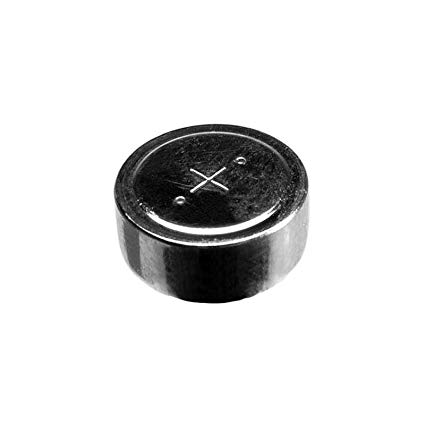
Power: PX76A/675A 1.35v mercury button cell. Now Defunct but modern solutions exist
ASA 25 -500 with DIN Equivalents in multiple steps
Production country on base
This is a typical fixed lens 35mm rangefinder from the 1970s, but with a body on the large side. The lens is a fixed Yashinon 45/2.8 which focuses from about 1m to infinity and takes 55mm filters. The aperture priority exposure system is measured by a CdS meter above the lens. CdS metering requires batteries. Two LEDs on the top of the body indicate slow speed and over-exposure. The camera was available with either a black or chrome body.
...the MG-1 is an interesting model. It appeared in 1975 and seems to have been the end of the line. The MG-1 was produced in both a chrome & black finish. The placement of the light sensor within the lens barrel made it possible as in the CC / CCN, to automatically adjust exposure with filters in place. This is visible as a small circle within the top & center of the lens barrel. A feature of this arrangement which is overlooked, is the inability to obtain a correct exposure indication, if one forgets to remove the lens cap. Come on now, 'fess up....who hasn't lost a shot with an RF when a lens cap was mistakenly left on during an exposure. The lens has a maximum aperture of ƒ:2.8 with a focal length of 45mm. This highly colour corrected lens has 5 elements in 4 groups.
It also comes with the usual silver metal finish.
Type: 35mm Rangefinder Film Camera with aperture priority auto exposure only. Released in 1975. It came out in both chrome or black body versions
Lens: Yashinon 45 mm f2.8. The focus range is from 1 m to infinity. Marked in both feet and metres. 4 elements in three groups. Filter size 55mm.
Viewfinder: Viewfinder combined with a rangefinder. Bright frame with no parallax correction. Magnification 0.59x. Red and yellow exposure indicator arrows visible through the viewfinder. When lightly pressing the shutter button a red light indicates overexposure. Yellow light means that although exposure will be correct a slow shutter speed will be used meaning the camera must be held steady and it is best to use a tripod.
EE Mechanism: Built-in exposure meter with CdS “Top-Eye” cell for automatic exposure control. Shutter speed priority system.
Film Speeds: ASA 25 to 800 / Adjustment on a ring at front of the lens.
Battery: 1 x 5.6v mercury battery (no longer available). (Eveready E164, Mallory PX32, or equivalent). Without a battery, the shutter free runs at 1/500 second so the camera cannot be used. You can also use 4 x 1.5v alkaline or silver oxide button cells stacked together and taped. Or a 6v L28.
There is no manual control of the shutter speed.
Shutter: Leaf Shutter. Speeds range from 2 seconds to 1/500 of a second. Automatically sets aperture, self-cocking combined film/shutter wind, and x synchronization. There is no B setting for long time exposures. However, the Copal shutter is stepless and so does not stick to the standard speeds of 1/500, 1/250 of a second and so on. Instead, it picks any speed to best suit the available light and aperture combination. Although the manual states the camera’s auto exposure can go down to 2 seconds in poor light, in reality, it can easily run for much longer. Mine goes for about 20 seconds.
Self Timer: Yes. Runs for 7 seconds.
Flash Contact: an Accessory shoe with direct contact plus conventional flash socket.
Flash. Shutter speed automatically sets to 1/30 second when the Auto Lever is adjusted to “flash”.
The Yashica TL Electro-X is part of the TL series of SLR cameras. It was introduced in 1968 and may have remained in production until 1975 (when Yashica adopted their Yashica/Contax bayonet mount).
The Yashica TL Electro-X ITS was introduced in 1972, and sold alongside the first model. Externally the ITS differed by the pentaprism "Y" being replaced by a gold coloured "Atom" symbol. The ITS also came only in black, while the X was made in chrome and black finishes. Otherwise, the only identifiable differences between the two cameras were an increase of the x-sync speed to 1/125 on the ITS.
The TL Electro X was the first camera with viewfinder electronic lights for exposure information (miniature lamps, not LEDs), and also the first with a mechanical shutter with step-less electronic timing, which operates at any intermediate speed between 2 seconds and 1/1000th. The selection of an intermediate shutter speed is largely guesswork. Speeds above 1/30th are click stopped, but it is possible to set the speed dial between settings. The slower speeds are not click-stopped, reflecting Yashica's intention for lower light exposures to be metered by adjustment of the shutter speed rather than the lens aperture.
Two lights in the viewfinder indicate over and under exposure, and point towards the direction in which the lens aperture ring should be moved. Adjusting either the aperture ring or shutter speed dial until these go out indicates that the correct exposure has been set.
Lens mount: M42 screw.
Focus: Reflex viewfinder with micro prism focusing spot, ground-glass collar. DOF preview button.
Shutter: Electrically operated vertical travelling metal focal-plane shutter with speeds from 2 sec to 1/1000th sec., + B and self-timer with mirror lock-up.
Meter: Stop-down, thru-the-lens, centre-weighted, CdS light measuring system; electronic exposure readout (warning lights indicate under and over exposure corrections).
Exposure: Manual.
Film Speed: 25 to 800 ASA.
Flash: Standard X and FP synch, with X-synch hot shoe at 1/90th (X) or 1/125th (ITS).
Film Advance: Ratchet type single-stroke wind lever.
The FX-70 is a automatic exposure 35mm SLR camera from Yashica.
The camera uses interchangeable lenses with the C/Y mount. It has an electronic quartz timed, vertical travelling metal focal-plane shutter with speeds from 11s to 1/1000 with B. Flash sync is at 1/100 a sec.
It features a TTL center-weighted metering system with a aperture-priority automatic exposure mode. It uses a silicon photo diode with a measurement range 1 to 18 EV (ISO 100, with f/1.4 lens). The film speed setting range is at ISO 25 to 1600. Auto exposure lock lever is on the front right of the camera. Exposure compensation is available with a range of + 2 to -2 EV.
The viewfinder contains 15 red flashing LED's on the right side for shutter speed indicators with over and under exposure. It's a eye-level pentaprism 95% field of view and a magnification of 0.86x. The self-timer is electronic quartz based with a delay of 10 seconds. It is activated by rotating a lever below the shutter release button. The LED on the left of the body flashes before the shutter releases and can be cancelled during countdown. It is powered by two LR44/SR44 batteries.
• Type: 35mm single-lens reflex with quartz-controlled, aperture preferred automatic exposure.
• Lens Mount: Contax/Yashica three-claw bayonet .
• Standard Lens: 50mm f/1.4 , f/ 1.7, fl2 or 42-75mm f/3.5-f/4 .5
• Shutter: Quartztimed, electronically-controlled vertical metal focal paine type with speeds L T (11 sec.) to 1/1000 sec. on auto, B, X (1/100 sec.) setting .
• Flash Synch.: X-5ynch. at 1/ 100 sec . (or slower) via direct hot-shoe. Auto flash dedication with CS-201 Auto electronic flash unit .
• Self Timer: Quartztimed electronic self-timer with 10 sec. delay, cancellable during operation . LED flashes during operation, accelerating 2 sec. before shutter releases.
• Shutter Release: Electromagnetic with 0.7mm stroke, interconnects with all off-camera control accessories.
• Exposure Control: Through-the-Iens (TTL) center weighted metering at full aperture using SPD (Silicon Photo Diode) sensor; EV1 to EV18 (ASA/ISO 100 at f/1.4) with ±2EV exposure compensation.
• Exposure Check: Viewfinder LED display lights up for 10 seconds when a 51 ight pressu re is appl ied to the shutter release button .
• Film Speed Range: ASA/ISO 25 to 1600 .
• AE Lock: Locks in shutter speed, aperture can be varied. For special effects with intentional OVER or UNDER exposure.
• Viewfinder: Silver-coated penta prism type, shows 95% of actual area at 0.86x ma~nification .
• Focusing Screen: Horizontal split-image with microprism .
• Viewfinder Display: LED display of auto shutter speeds with OVER/UNDER warning and LED flash-ready indicator. 10 second auto cut-off conserves battery power.
• Film Advance: Manual advance with 1300 stroke .
• Film Rewind: By rewind crank after rewind film release button is pressed .
• Frame Counter: Accumulative, auto-resetting type .
• Power Source: Two 1.55V silver-oxide batteries SR-44 or 1.5V alkaline batteries LR-44 .
• Battery Check: Low power level indicated by slow flickering of viewfinder LED display .
• Other Features: contoured grip on camera body. Padded simulated leather covering. Four-position main switch (Off/ Auto /X/B).
• Size: 135 x 88.5 x 50mm (5-5/ 16 x 3-1 /2 x 1-15/ 16 in.)
• Weight: 435 g w/o battery (15.3 ozs.)
The Yashica 108 MP also known as Yashica 108 Multi Program, Yashica 108, or name variation incorporating Kyocera, Kyocera Yashica 108, etc. It is a 35mm SLR camera manufactured by Kyocera.
A version marked Revue AC8 was available at German Foto-Quelle dealers, a Yodobashi The 30th Anniversary was made for this well known Japanese camera shop. A Chinese market version was available called Yashica FX-80.
It uses the Contax/Yashica mount or C/Y mount. This model is similar to the 107 MP, but has different program modes. There are five program modes. Program auto, HP: hi-speed program auto, AV: aperture priority, manual exposure and manual flash exposure. The shutter release is electronic, a standard cable release socket is also provided. The film transport also supports single or continuous drive mode, the setting is located on the collar of the rewind knob. After all exposures on the roll are exhausted, the camera will stop, to rewind press the button located on the base and use the film rewind knob.
Focusing is done manually, and aided with a horizontal splitimage spot including a microprism. The viewfinder provide 0.82x magnification, providing a nearly 92% field of view. There are LED confirmations in the finder, flash, circle, down arrow and up arrow. The flash lights up when fully charged and blinks when shutter is slower than 1/30 a sec. The circle lights in program modes, and blinks if settings need to be adjusted. The down and up arrows both light if the exposure is correct in manual mode and blinks in B: Bulb mode. If the arrows are individuality lit; in manual exposure mode, setting need to be adjusted. The down arrow is under exposure. The up arrow is over exposure. Blinking in AV mode, means the camera is unable to compensate to the lighting conditions. A handy backlight compensation button is also provided near the lens mount. It adds 1.5 EV to the exposure.
Manufacturer: Kyocera, Japan
Lens mount: Contax/Yashica or C/Y bayonet mount lenses
Shutter: Vertical metal focal plane
Shutter speed: auto: 16s to 1/2000 manual: 1 to 1/2000 and B
Flash: X sync at 1/90 or slower
Metering: TTL center weight with SPD sensor
Metering range: 2 to 19 EV (100 ISO)
Film speed: Auto DX 25 to 3200 ISO, non-DX 100 ISO
Self timer: electronic 10 sec.
Film advance: automatic
Film rewind: manual with knob
Batteries: 4x AAA battery
Weight: about 500g
Dimensions: 149 x 93 x 52 mm
The FX-3 was a very popular, manually-operated, 35mm single lens reflex camera, released by Yashica in 1979, and built by Cosina. It has a vertical metal-bladed mechanical focal plane shutter with speeds up to 1/1000, an exposure meter with a simple 3-LED reading in the viewfinder, and no automatic metering or focusing modes. The camera is very compact and lightweight for an SLR design, and weighs about 1 pound (450 grams). One of the camera's greatest attributes is that it will accept all manual-focus Yashica / Contax lenses, including the superb Carl Zeiss T* lenses intended for the Contax line. The FX-3 was available only in black, though there was also an otherwise identical FX-7 model that came in a chrome finish.
In 1984 the FX-3 was replaced by the FX-3 Super, that added a vestigial grip to the body, a flash-ready indicator in the finder, and moved the meter switch to the shutter release button. It too was only sold in black finish. Kyocera (which had acquired Yashica in 1983) released the FX-7 Super in 1985, exactly the same camera finished in chrome.
In 1986 the FX-3 Super was in turn succeeded by the FX-3 Super 2000 with a shutter speed range extended to 1/2000, and a wider ISO range from 25 - 3200 ISO instead of 12 - 1600.
These inexpensive cameras have developed a reputation for reliability, mostly due to their extremely simple construction and durable metal chassis with plastic outer shell. The leatherette exterior covers of the FX-3 are a well-known weak point, and tend to disintegrate after a few years, but are easily replaced. Later Super 2000 models were sourced from China, and some components were changed to lower costs.
A fully mechanical body with a simple metering system. I have never seen a more basic body: you can set shutter time and film speed, there is a button to switch on the TTL LED meter (which shows a plus, a minus or a zero in the viewfinder to indicate its opinion of the current settings), a film wind lever, the shutter release, a timer lever, and a lens unlock button. That's all there is. Nice points: it's very compact and light-weight, you have mirror lock-up with the timer, and it doesn't need batteries to operate. And it does have all the necessities of life: split-image focusing, hot shoe, a vertical metallic shutter (so flash sync is at 1/125th), etcetera. I like this box a lot.
The FX-3 Super is mostly the same as the FX-3, but activating the meter is not via a separate button, but by pressing the shutter release button lightly. That's generally a sound ergonomic improvement, but especially left-eyed shooters will benefit from this.
The FX-3 Super 2000 has an added shutter speed of 1/2000th. Full specs on the FX-3 Super 2000 are on Yashica's website under http://www.yashica.com/yashica/slr/fx3super2000/fx3super2000.html. Other differences: flash ready display in viewfinder and a built-in hand grip.
Later, a version of the FX-3 called FX-7 was marketed. It is a chrome body which was sold in a set with two DSB lenses and a hardbag.
The Yashica J is a 1961 rangefinder camera. It has a high quality lens and a rather limited set of shutter speeds. At the time of release, it was probably considered a budget model, since the better equipped Yashica Lynx 1000 and Yashica Minister series were being marketed at approximately the same time. Confusingly, the Yashica Penta J SLR and its successors are often referred to as the Yashica J line.
Two sets of framelines are visible in the viewfinder, one set for infinity focus and the other one for closer focus. There's no automatic parallax correction as on the later Yashica Electro 35 series. The rangefinder is coupled to the focusing ring. This ring has a small lever to make focusing more comfortable.
At last.....a Custom Built Personalized Yashica, just for me with an impressive "in your face" monogram, that no one could ignore. So if your name happens to be Jane, Joe, Judy or James, you just 'gotta' have one of these.
If not... well you might just ponder on why they brought this model to the market place. My take is that they had a great many left over parts from various models and integrated them into an endless alphabet soup of price killer models. Careful observation shows that it's not quite in the Lynx 1000 league
It combines the Lynx body and bottom plate, but the place where an exposure system would go is blank. Hence the billboard size J Logo. On the reverse side of the top plate a cover screw provides access to the range-finder's split image vertical adjustment screw.
The modest Copal Shutter and lens assembly are from the YK era inventory. The Yashinon 45mm ƒ2.8, lens has 4 Optical Elements in 3 groups, and is mated to a shutter with a top speed of 1/300th, with added settings at 1/100, 1/50, 1/25 and Bulb. Flash synch is X for strobe guns at any shutter speed setting.
As the top view with the cover removed reveals, the frame line is fixed. This may be due to the fact that the closest focus distance is 1 meter, which is easily compensated for by the dual frame line visible in the finder. To reset the frame counter, the dial is turned gently in a counter-clockwise position with the tip of a finger.
The stripped down view shows the frame counter ratchet arrangement which has 2 pawls [fingers] engaging the gear. The mask which provides the superimposed frame line in the finder can also be seen. It appears to be stamped out of brass.
The reverse side of the front bezel is shown. Unlike later Yashicas, this holds the front lens element of the finder. Glass only protects the Rangefinder elements. Visible too, are wooden shims which hold the bezel in the correct alignment to the body depending on minor variations in the castings. Does this make the camera susceptible to termite attack ? That's not as far out as you may think, because when I took this camera apart, I found a mummified mealie worm of some sort next to the finder.
The lens is a fixed 45mm F/2.8 Yashinon with apertures from 2.8 to 16. The minimal focusing distance is 1 meter. There a framecounter around the advance lever, counting up from 1 to 36. On the back a small screw permits adjustment of the rangefinder without opening the body. The Yashica J has a rewind crank which will not open the back door; opening the camera is achieved by moving and depressing a small button on the bottom plate.
At least two variants of this camera are known: one with the *J** logo on a black field and with a black lens barrel, and another with a metal colored field and lens barrel.
The Yashica FR-II was an electronically-controlled 35mm film SLR cameramade by Yashica and produced between 1977-81.
Based on earlier FR I, the FR II dropped the manual exposure controls of that camera, with shutter speeds set automatically by the camera's metering system (except for Bulb and Flash settings). Equipped with the C/Y common bayonet mount, the FR-II could accept a variety of Yashica / Contax lenses and was targeted at the beginning photographer who did not want or need manual control of shutter speeds.
Type: TTL metering fully automatic exposure 35 mm SLR camera
Standard Lenses: Yashica Lens DSB 50 mm f/1.9, Yashica Lens ML 50 mm f/1.7, Yashica Lens ML 50 mm f/1A, Yashica Lens ML 55 mm f/1.2 (each with automatic diaphragm).
Lens Mount: Contax/Yashica mount. Negative Size: 24 x 36 mm
Shutter: Electronically Controlled horizontal run focal plane shutter. Shutter speeds automatically varied between 4 sec. to 1/1000 sec. at AUTO setting, Bulb setting (B) for long exposure and electronic flash synchronization setting (I) for manual operation.
Self Timer: Built-in lever type; releases in 7 sec.
Shutter Release: Feather-touch electromagnetic release release socket on camera body for auxiliary shutte; release.4www.butkus.org
Exposure Meter: TTL aperture-preferred fully automatic exposure control. Center-weighted full aperture light metering via SPD cell.
Exposure Check Button: Push Button/slide type; lockable with film advance lever slightly cocked.
Exposure Range: Between EV 1 - 18 with f/1.4 standard lens using ASA film.
Exposure Compensation: +2 EV
ASA Filrn Speed Settings: ASA 12 - 3200
Power Source: 6 V silver oxide battery (Eveready 544 Ucar 544, Mallory PX-28 or equivalent). Viewfinder: Through-the-lens reflex viewfinder; shows a field of approx 92% of the actual picture area with an image magnification of 0.87X. Shutter speeds indicated by pointer from 1/1000 sec. - 1 sec.
Focusing Screen: diagonal split-image centerspot with microprism collar.
Film Advance: single-frame advance via film advance lever with 140 degree full stroke, or multiple short ratchet stroke advance; frame count registers on exposure counter. Sequential film advance to 2 fps with optional Yashica Winder unit.
Film Rewind: via film rewind crank.
Back Cover: Standard back opens by lifting out on film rewind crank.
Other Features: Battery confirmation lamp; lens release button, memo holder, direct X contact accessory shoe.4www.butkus.org
Size and Weight: 142.5 x 87 x 50 mm 650 grams (body only)
Modelo
Aparentemente só existiu um modelo. Aminha tem o n.º de série 030769.
A lente é uma Yashica ML 55 mm f/1.2.
Pilha
A câmara é acompanhada de uma bateria UCAR Silver Oxide n.º 544 6V.
Yashica Minister D, manufactured around 1963 in Japan. This 35mm rangefinder camera has a Yashica Yashinon 5 elements in 4 groups 4.5cm f/2.8 lens, helical focus 2.6 ft to infinity, Copal-SVL shutter (speeds 1 to 1/500 sec + B, M,X, delay action) and an uncoupled CDS exposure meter. It has a parallax corrected viewfinder.
The Minister D accepts 46 mm screw-in filters and 48 mm push-on lens hoods.
The Yashica Minister D rangefinder camera was manufactured in Japan beginning around 1963. The main change from the Yashica Minister III was the new CdS meter cell mounted below the rewind crank. However the light meter remained uncoupled from the exposure settings on the lens barrel. The Minister 700 is a variant of the same camera but with a faster, f/1.7 lens.
The light meter indicator measures light from 3 to 17 LV. To determine the EV, the scale on the meter can be adjusted to match the film ISO.
The lens barrel has an LVS ring to set the exposure level. The ring has LV numbers from 2 to 17. Turning the LVS ring alone adjusts the aperture ring automatically to maintain the same exposure level, giving this camera a kind of shutter-priority mode. Reaching the minimum or maximum aperture will then automatically turn the shutter ring too.
Manufacturer: Yashica
Date of Production: circa 1963
Type of Camera: Rangefinder camera
Film type: 35mm film
Lens: Yashinon 45mm f/2.8, focus range 70cm-infinity
Shutter: Copal-SVL leaf shutter
Shutter speed range: self-timer delay, B, 1-1/500s
Viewfinder: eye-level rangefinder with parallax correction
Flash: cold shoe with PC socket, X and M sync modes
Exposure Modes: manual, quasi-shutter-priority
Exposure Metering: uncoupled CdS
Focusing: manual
Film advance: manual lever with double-exposure prevention
Battery: Mallory PX-13 or 625 button cell for light meter
Weight: 675g
The bug eyed Yashica "Minister" III morphed into the Minister [IV] Model D in 1964 [ as near as we can tell ]. As hard as we look, we can't find anything that's not to like on this camera. It may be the perfect choice for a photo / journalism student because the price is right and it comes "loaded". The dependable Yashica film transport serves to support the strictly mechanical Copal SVL shutter. The Yashinon 45mm ƒ2.8 lens has an angle of view of 56º. Yes, there are faster Yashinons out there, but the fact is that film emulsion speeds have increased to such a degree while the grain structure has actually been reduced since the introduction of these cameras, that ASA 100 film with the ƒ2.8 lens, may be all that you will ever need. The lens mount accepts 46mm screw-in accessories.
Let's leave the editorializing behind and see what make this camera tick.
User selectable shutter speeds are: B, 1, 2, 3, 4, 8, 15, 30, 60, 125, 250, 500. secs. The shutter can be set at M or X synch. One oddity is that the shutter must be set at X synch to use the self timer, regardless of whether you are using flash or not. A self timer with a nominal 8 sec delay is provided. The shutter button is threaded to accept a cable release. Electronic flash fires and synchs at any speed, great for exterior fill light.
The user selectable aperture ranges from ƒ16 to 2.8. Moving the aperture ring, changes the selected ƒ stop in step with the shutter speed dial.
To move only the ƒ stop, an extreme outer ring is provided. Changing the shutter speed is therefore a two step procedure. First move the Aperture and the Speed in tandem to the desired speed, then move the Aperture only to alter it's desired setting, using the outer ring. This might seem like a pain, but most of the time really speeds up any change you wish to make once the initial correct exposure has been determined.
The outer ring is numbered to coincide with the numbers on the Exposure Meter dial. Yashica's tried and true split image range-finder, self corrects for parallax. Manual focus is capable from 2.6 ft [0.8 meters] to Infinity, with clear graduations, in case it ever gets too dark to use the range-finder. The specific camera we are looking through, even as we write, has no problem focusing on distant areas of the room which are too dark to comfortably read a newspaper by. Try that with your SLR ! The independent built in exposure meter can be set within a range of ASA 10 to 400. There is no DIN scale. The exposure meter runs off a 625A battery, inexpensive and readily available, but not required to use the camera. The lack of a Hot Shoe is probably a plus, as this encourages the use of a hand grip / flash holder combo, the only way to get both a secure grip on such a small instrument and freedom from dreaded "red eye". A PC socket is mounted on the front left, and as with all front located photo flash connectors, care should be taken to make sure that the cable cannot dangle in front of the lens. A button with a red dot, located at the rear, extreme top left of the camera, activates the exposure meter. A plastic stud about halfway across the top rear, is just a dummy plug, for what may have been intended as a battery check during the design stage. This is common to several Yashica models. The loading door is opened by sliding a small lever on the left side of the base from "P" to "O", and while in the "O" position, pressing inward. It takes a little practice to get used to this. The tripod mount socket is secured to the frame of the camera by 4 screws on a mount beneath the cover plate. The thread stops short of bottom leaving enough space to work a wire tie under, and can be clearly seen through the hole as it makes it's way. What this means is that a portal exists for all sorts of contaminants to enter into the inner workings of the camera. We store our camera with a ¼ X 20 set screw inserted. Keeping the camera in a case would solve that, but of course you know that "carrying" cases are for just that purpose. Never store a camera, collectors knife or gun in a case, most particularly in a warm climate with salt air, but then everyone knows that, or do they? A small number of these cameras were produced under the marque, Minister 700 with an ƒ 1.7 lens. The only 700's that I have ever seen on offer were in the UK.
The Yashica J is a 1961 rangefinder camera. It has a high quality lens and a rather limited set of shutter speeds. At the time of release, it was probably considered a budget model, since the better equipped Yashica Lynx 1000 and Yashica Minister series were being marketed at approximately the same time. Confusingly, the Yashica Penta J SLR and its successors are often referred to as the Yashica J line. Two sets of framelines are visible in the viewfinder, one set for infinity focus and the other one for closer focus. There's no automatic parallax correction as on the later Yashica Electro 35 series. The rangefinder is coupled to the focusing ring. This ring has a small lever to make focusing more comfortable. The lens is a fixed 45mm F/2.8 Yashinon with apertures from 2.8 to 16. The minimal focusing distance is 1 meter. There a framecounter around the advance lever, counting up from 1 to 36. On the back a small screw permits adjustment of the rangefinder without opening the body. The Yashica J has a rewind crank which will not open the back door; opening the camera is achieved by moving and depressing a small button on the bottom plate. At least two variants of this camera are known: one with the *J** logo on a black field and with a black lens barrel, and another with a metal colored field and lens barrel.
At last.....a Custom Built Personalized Yashica, just for me with an impressive "in your face" monogram, that no one could ignore. So if your name happens to be Jane, Joe, Judy or James, you just 'gotta' have one of these.
If not... well you might just ponder on why they brought this model to the market place. My take is that they had a great many left over parts from various models and integrated them into an endless alphabet soup of price killer models. Careful observation shows that it's not quite in the Lynx 1000 league
It combines the Lynx body and bottom plate, but the place where an exposure system would go is blank. Hence the billboard size J Logo. On the reverse side of the top plate a cover screw provides access to the range-finder's split image vertical adjustment screw.
The modest Copal Shutter and lens assembly are from the YK era inventory. The Yashinon 45mm ƒ2.8, lens has 4 Optical Elements in 3 groups, and is mated to a shutter with a top speed of 1/300th, with added settings at 1/100, 1/50, 1/25 and Bulb. Flash synch is X for strobe guns at any shutter speed setting.
As the top view with the cover removed reveals, the frame line is fixed. This may be due to the fact that the closest focus distance is 1 meter, which is easily compensated for by the dual frame line visible in the finder. To reset the frame counter, the dial is turned gently in a counter-clockwise position with the tip of a finger.
The stripped down view shows the frame counter ratchet arrangement which has 2 pawls [fingers] engaging the gear. The mask which provides the superimposed frame line in the finder can also be seen. It appears to be stamped out of brass.
The reverse side of the front bezel is shown. Unlike later Yashicas, this holds the front lens element of the finder. Glass only protects the Rangefinder elements. Visible too, are wooden shims which hold the bezel in the correct alignment to the body depending on minor variations in the castings. Does this make the camera susceptible to termite attack ? That's not as far out as you may think, because when I took this camera apart, I found a mummified mealie worm of some sort next to the finder.
The Electro 35 is a rangefinder camera made by Japanese company Yashica from the mid-1960s with a coupled and fixed 1:1.7 45 mm lens. It was the first electronically controlled camera, operating mainly in anaperture priority 'auto' mode. The only other modes of operation are 'flash' (1/30th) and 'bulb'.
Especificações
The original Electro 35 was introduced in 1966. It has a "cold" accessory shoe and the meter accepted film speeds from 12 to 400 ASA. Light levels are measured using a cadmium sulphide (CdS) photoresistor and powered by a mercury battery. The film speed adjustment is not implemented electronically; instead a simple twin-bladed diaphragm closes in front of the light sensor as the film speed is reduced. The light metering electronics works by accumulating the measured light level and only releasing the shutter when it has determined enough light has fallen on the film. This system allows the shutter speed to be completely step-less and to adapt to changing light levels. SLR's would wait many years for a similar capability with off-the-film metering. The metering system can keep the shutter open for up to 30 seconds. Without a battery to power the meter, the shutter defaults to its top speed of 1/500 second.
The Electro 35 G was introduced in 1968 with largely cosmetic changes. The range of usable film speeds was extended a little up to 500 ASA. The lens was labelled a "Color Yashinon" to reassure the buying public that it was colour corrected at a time when the use of colour film was growing quickly. The Electro 35 GT was released in 1969 with a body painted black instead of the satin chrome finish.
The Electro 35 GS and GT were introduced in 1970 . They (and all later Electro 35's) have all internal electrical contacts goldplated to prevent oxidation from impeding the flow of electricity around the circuits. The range of usable film speeds was doubled to range from 25 to 1000 ASA.
The Electro 35 GSN (satin chrome) and GTN (black) were introduced in 1973. The major change for these cameras was the addition of a hot shoe while keeping the PC socket.