This is a cheap camera, from the 70´s & 80´s when in Spain was having a lot of “little” changes. It is a camera with focus free, and 3 positions for its speed. You must charge the film, pass this one and … shoot !!!
A lot of Spanish homes have a little camera like this: all our life, vacancies, work, … has been impressed in a lot of photographs taken by cameras like this one.
It was one the latest and genuine “Spanish product”, in the years that this was a very important thing in our world.
Today, all this little firms was for the great and omnipotent global trademarks, or simply closed the factories.
This lovely camera can rewind the film with the same mechanism like other cameras. You push the button in the “bottom” of the camera and, then, you can use the little crank in the left. It is easy to make doubles with other cameras …I like to do it with another ones. You can´t do doubles exposures, in the same point, but it will give you “special” results !!!
As the Werlisa Club Color only has two iso sensitivities (100 and 400 ISO), what I do is to load a spool of 200 ISO, and I use the references of 100 ISO to overexpose lightly the film. I believe that this camera answers of forceful form to the rule: Do not think!, just shoot! It does not have rear window to be able to see the spool that it has inside, it can be very useful for the “surprise effect” of the photos. It is robust and it bears very well the “ill-treatment”.
Werlisa é o nome de uma extensa série de câmeras, em constante evolução, produzido por Certex, que marcou uma era na fotografia amadora na Espanha.
As câmeras são funcionais, com óptica boa, inteiramente adequado para fotografia a cores e teve um grande sucesso no mercado espanhol para os fãs à procura de uma câmara que lhes permitam memória de imagem.
O Werlisa Cor Club é a primeira das câmaras da segunda geração deste tipo feita por Certex, inspirou a criação de câmaras simples e de baixo custo que pode ser utilizado por um público não familiarizado com a fotografia e cuja única pretensão de tirar as fotos de memória.
Estas câmaras são caracterizadas pelo abandono de vidro e metal e com a introdução de plástico para o corpo para a óptica.
It has 3 settings on the ring around the focus free lens: sunny, cloudy and flash.
The lens is a Certar 38mm f/7.5, and there is only one shutterspeed. Film transport is done by a thumbwheel on the back of the camera, it also cocks the shutter. The camera does not need any batteries.
Tipo de Câmera: Compacta
Fabricados em: Espanha
Ano de fabricação: 1976
Objetiva: 38mm f Certa 7,5 de acrílico.
Obturador: Três velocidades (1 / 30, 1 / 60, 1 / 120).
Diafragma: Fixo (7.5)
Tipo de filme: 135 (Universal)
Foco: 2.5m ao infinito fixo.
Fabricante: Certex
This is a cheap camera, from the 70´s & 80´s when in Spain was having a lot of “little” changes. It is a camera with focus free, and 3 positions for its speed. You must charge the film, pass this one and … shoot !!!
A lot of Spanish homes have a little camera like this: all our life, vacancies, work, … has been impressed in a lot of photographs taken by cameras like this one.
It was one the latest and genuine “Spanish product”, in the years that this was a very important thing in our world.
Today, all this little firms was for the great and omnipotent global trademarks, or simply closed the factories.
This lovely camera can rewind the film with the same mechanism like other cameras. You push the button in the “bottom” of the camera and, then, you can use the little crank in the left. It is easy to make doubles with other cameras …I like to do it with another ones. You can´t do doubles exposures, in the same point, but it will give you “special” results !!!
As the Werlisa Club Color only has two iso sensitivities (100 and 400 ISO), what I do is to load a spool of 200 ISO, and I use the references of 100 ISO to overexpose lightly the film. I believe that this camera answers of forceful form to the rule: Do not think!, just shoot! It does not have rear window to be able to see the spool that it has inside, it can be very useful for the “surprise effect” of the photos. It is robust and it bears very well the “ill-treatment”.
Werlisa é o nome de uma extensa série de câmeras, em constante evolução, produzido por Certex, que marcou uma era na fotografia amadora na Espanha.
As câmeras são funcionais, com óptica boa, inteiramente adequado para fotografia a cores e teve um grande sucesso no mercado espanhol para os fãs à procura de uma câmara que lhes permitam memória de imagem.
O Werlisa Cor Club é a primeira das câmaras da segunda geração deste tipo feita por Certex, inspirou a criação de câmaras simples e de baixo custo que pode ser utilizado por um público não familiarizado com a fotografia e cuja única pretensão de tirar as fotos de memória.
Estas câmaras são caracterizadas pelo abandono de vidro e metal e com a introdução de plástico para o corpo para a óptica.
It has 3 settings on the ring around the focus free lens: sunny, cloudy and flash.
The lens is a Certar 38mm f/7.5, and there is only one shutterspeed. Film transport is done by a thumbwheel on the back of the camera, it also cocks the shutter. The camera does not need any batteries.
Tipo de Câmera: Compacta
Fabricados em: Espanha
Ano de fabricação: 1976
Objetiva: 38mm f Certa 7,5 de acrílico.
Obturador: Três velocidades (1 / 30, 1 / 60, 1 / 120).
Diafragma: Fixo (7.5)
Tipo de filme: 135 (Universal)
Foco: 2.5m ao infinito fixo.
Fabricante: Certex
he Yashica ME 1 is a small, compact 35mm viewfinder camera with auto-exposure, made in both Japan and Brazil by Yashica.
It was possibly the first camera produced in Brazil by the Yashica factory in Sorocaba Sao Paulo from 1977. Production in Japan appears to have been earlier,
The focus zone settings are visible in the viewfinder through a small square window, below the finder window. Behind the focus ring is an aperture ring - with an "A" setting for automatic and stops from f/2.8-16 for flash. Film advance is by a thumb-wheel on the lower left of the back.
The film speed is set using a ring around the lens, with a display just below. The CdS photocell is just above the lens, inside the filter thread - allowing the auto-exposure to compensate for filters.
The top plate carries the shutter release, hot shoe and frame counter. There is a lever for the self-timer on the front.
Lens: Yashica 38mm f/2.8; 4 element, 3 group. 46mm filter thread.
Focus: 4 Zones (1, 1.5, 3m and infinity) and feet/metres scales
Metering: CdS cell
Shutter: Copal auto, speed set by metering, 1/60-1/360 sec.
Filter Thread: 46mm
Flash: hot shoe
Power: PX76A/675A 1.35v mercury button cell. Now Defunct but modern solutions exist
ASA 25 -500 with DIN Equivalents in multiple steps
Production country on base
The Konica C35 of 1968 is a 35mm camera and first of a series of four cameras from Konishiroku that are dealt with in this article, the others being the C35V (C35E&L), C35 Automatic (C35 Flashmatic), and Auto S3 (C35FD). The Konica C35 EF is dealt with in another article.
The Konica C35 was the first of a number of compact cameras that swept the marketplace in the early seventies. Cameras from other Japanese companies after 1970 (see photo at end) show its importance and influence. Its appeal to the general public was obvious from the start: it was a compact, light and simple to use camera with an excellent lens that was distinctly wider than average for the time and that took good photographs because it could be focused accurately. It was an outstanding sales success throughout the world.
Konishiroku may at first seem a mere follower of fashion, updating the design theme of the compact Minolta Minoltina S and Olympus Trip 35, or even its own Konica Eye of 1964. However, the C35 was much more than an update: it brought together a number of other desirable design strands into one camera, not simply light weight and compact size, but a CdS meter in the lens mount (eliminating worries about filter correction factors), a rangefinder and most importantly of all, the simple operation of "auto only" exposure.
There are three versions of the modestly-priced C35:
Konica C35 (1968 - Silver 1969 - black)
The non-rangefinder Konica C35V (1971 - silver), known in Japan as the Konica C35E&L
The Konica C35 Automatic with a more advanced flash control (1971 - silver), known in Japan as the Konica C35 Flashmatic
Available only in silver
38mm f2.8 four-element Hexanon lens - 46mm filter thread
Zone adjustment by four click stops (with pictogram's)
CdS meter (19-27 DIN, 25-400ASA)
No self timer
Closest focus - 1m, 3.3ft
2 blade programmed shutter
Combined aperture/shutter blades
Speeds 1/30 to 1/650
Lever wind, double-exposure prevention, resetting frame counter
Bright line finder
Needle indication of shutter speed and aperture visible on right hand side of viewfinder
Window lower right to few focus positions on lens
Width 112mm (actual 120mm with strap lugs) Height - claimed 70mm (actual 75mm) - Depth 52mm
Weight 340g (12 oz)
Price in Britain £41.48 (April 1974)
Konica X-14 matching flashgun available
Set to 1/25 automatically for flash
Plastic fixed focus compact 35mm camera with built in flash from Pentax. First model in the Pentax Pino series.
This model was first produced in 1984. It has limited features. The user sets the film speed and then selects either one of 3 pictograms for light level (Sunny, Cloudy Sun or cloudy) or on the same ring the distance for flash use by 3 pictograms (bust-size, half-length or full length portrait). There is a battery powered CdS metering but this only warns the user of too low light in viewfinder and does not lock the red shutter button in low light. Viewfinder is basic with no markers.
Flash has to be manually activated by red switch on rear causing a indicator LED/button to pop up. It is turned off by depressing the indicator button.
The user can adjust the aperture to settings beyond those indicated by histogram (e.g. you can widen the aperture at 400ASA 2 settings beyond the cloudy setting)
Lens: 38mm 1:3.8 pentax lens, 3 elments, 3 lens group-composition
Focus: Fixed, range 1.5m to infinity
Aperture: f/3.8 to f/19
Shutter: Mechanical leaf
Shutter Speed: Fixed, 1/125s
Metering: CdS low light warning only
Flash: GN 12 (ISO 100, in metres)
Batteries: 2xAA alkaline (not NiCd). Good for 360 flash discharges with new manganese alkali batteries
Film advance: Manual, thumbwheel on rear
Film speed settings: 100, 200 & 400 ASA
Tripod mount
175gm without batteries
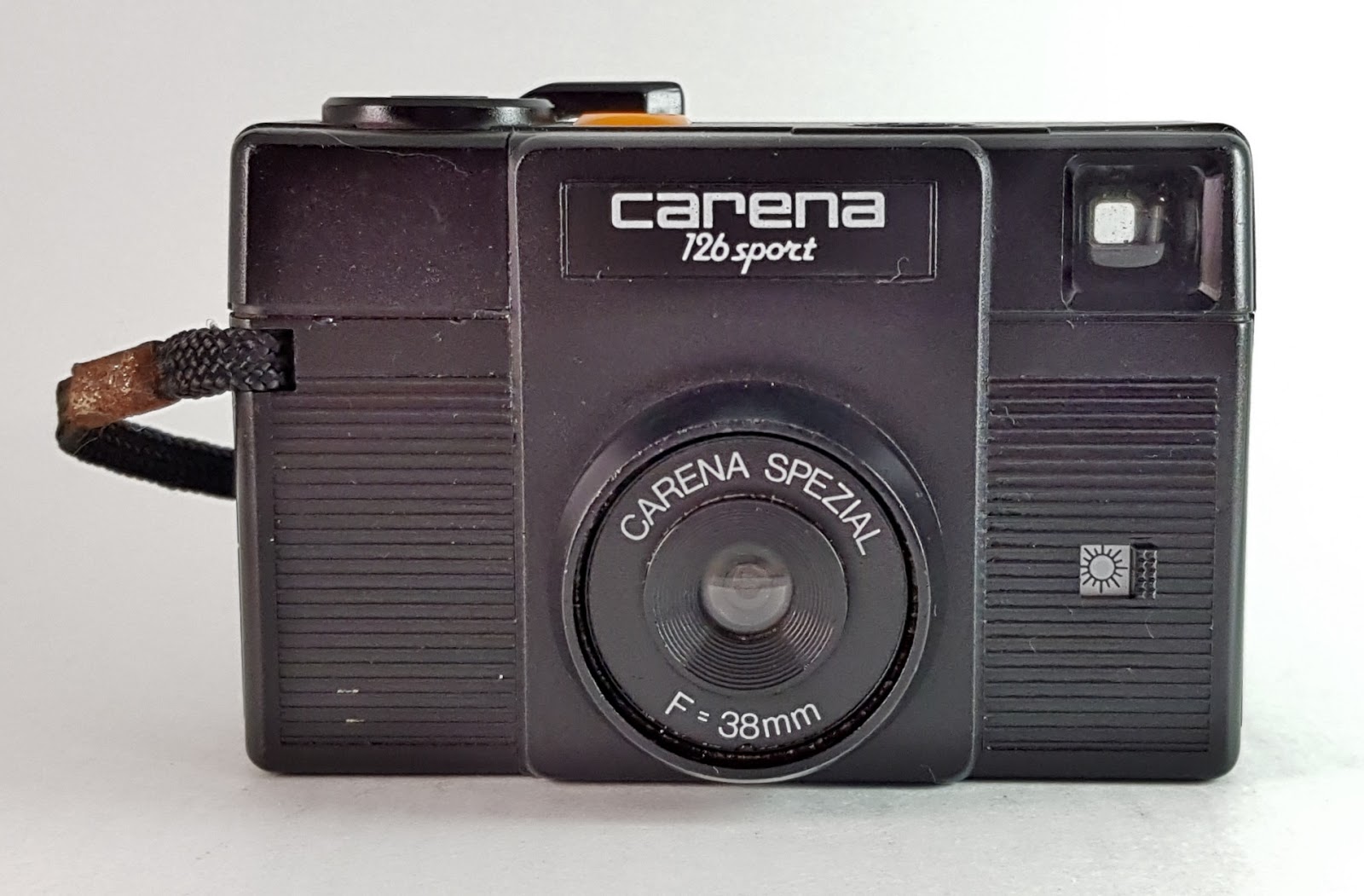
Photo Porst was a German distributor and retailer of many brands of cameras. It was founded in 1919 by Hans Porst in Nuremberg, Germany. For many years Porst bought cameras from other manufacturers, among them Adox, Agfa, Balda, Braun, Dacora, and Franka, and rebadged them. In the early years, from the 1930s to the end of the 1950s, it used the Hapo brand, an acronym of Hans Porst. Later on, the house brand cameras appeared under the PORST name, e.g. PORST compact reflex or PORST 135 BS. In the 1970s the house-brand Carena was added. A lot of these later house-brand cameras were produced by Cosina, but also by Balda, Franka, Fuji, Mamiya, Taron, and Yashica.
By 1996, the Porst chain of camera stores was Germany's largest photographic retailer, and in that year it was purchased by a Belgian investment group. In 2001, ownership was transferred to Pixelnet. The following year, the company became insolvent and the rights to the name Porst were sold to the German group Ringfoto.
The Concord 818 is a fixed-focus camera for 35mm film. It has a built-in flash, and manual film advance/rewind.
Fonte: camera-wiki.org
Concord 818, I Call it Big Red! Well that’s what it is.. BIG and RED. Its about as simple as cameras come. Focus Free with a flash, and a F5.6 38mm Japan Optics Lens. Point-click-develop-smile!!
Sadly I don’t know a lot about this Camera, other than it was made in China, probably late 80’s early 90’s looking at its sexy sumptuous design! It’s hefty size is incomparable to it’s light weight and I was surprised by this, but when you see it’s plastic construction it’s easy to comprehend why its weighs nothing in your hands – but this is not a negative thing, it feels substantial, and longs to be used and abused!
It’s ergonomic shape has an effective groove for your fingers below the shutter release button. Which is extremely comfortable to hold. The hand strap is on the left hand side, which to me somehow feels wrong, I guess this is because I like to use just one hand when shooting and it’s not that easy to have the wrist strap on and shoot at the same time.
The camera has a manual winder which clicks and clacks like a purring kitten and and a shutter which makes a quaint sound, almost like the sound of a pull cord light switch, the kind of sound that resonates briefly providing enough satisfaction and reassurance that the picture has been taken, but just gentle enough to make you question otherwise.
With a simple On/Off switch for the flash it can’t get much better than this! Light weight, no fiddling, pretty much a fashion statement casing it’s the ideal accessory for those quick snaps inside or out!!!!
Kodak's VR35-Series was a line of 35mm point-and-shoot cameras, introduced in 1986, marking Kodak's return to making 35mm cameras after a 17 year gap. The range continued until 1993. They had varying degrees of sophistication, ranging from the basic fixed focus models, with one aperture, no built-in flash and manual wind, to models with motor drive, programmed auto exposure and autofocus. Manufacturing sites included Japan, Hong Kong, Thailand and Taiwan.
The Sensoret was the only rangefinder type camera ever offered by MIRANDA CAMERA CO. It was a compact, snapshot type camera with a fixed lens and fully programmed exposure automation. Miranda provided a good quality 4 element 38mm Tessar type lens and a coupled rangefinder. The shutter was the new SEIKO ESF electronic shutter which controlled the speed and diaphragm settings simultaneously in a combined unit. Other cameras of this time also used this new shutter to provide full automation at a popular cost, such as the Minolta Himatic E, the Konica C35, or the Olympus EM. All of these cameras were totally electronically powered with two 640 1.4v mercury cells, which are no longer available in the US, so today most have limited possibility for on-going use. There was no manual exposure control provided.
In the USA and Japan, the Sensoret was available as a kit complete with a little custom flash gun, the EF-1. This flash worked with the Sensoret aperture adjusting according to the distance set by the user.
Miranda also offered a wide angle and telephoto auxillary lens kit, similar to lenses offered by other makers for their rangefinder cameras, notably Yashica. The magnification of these lenses, however, was only 0.8x and 1.3x respectively. Since the auxillary lenses totally obstructed the viewfinder, an external finder was fitted to the flash shoe of the camera. The rangefinder was not coupled to these lenses either.
The Sensoret was sold under both the MIRANDA and SOLIGOR brand names but there was no difference apart from the name identification. Most of the production was in black leatherette with chrome top and bottom plates, but other cosmetic versions were also offered. The basic black bodied finish was available with either chrome or black enamel finish to top and bottom plates.
In addition, chrome model variants were made with different coloured leatherette covering in small numbers. Sensorets with red, beige, grey, green or blue finish have accordingly become collector items.
Remember, without the 640 mercury batteries or equivalent, the camera's exposure system and shutter will not work at all.
Treasures for the Collector
Worth the hunt if you are into collecting more than the basic Sensoret. How practical are these lenses in practice? Don't expect normal Miranda versitality and professional easy of use from these accessories.. but they certainly look luxurious on this all black camera.
User Notes and what to look for:
Sensorets were consistent with other light amateur cameras of the era. That really means they were not exceptionally tough. Top and bottom plates were metal, with good but not outstanding chrome. In my experience, many are found at camera shows in user condition at best. The wind lever is concealed in the body, but that means that a considerable length of the top plate has to be self supporting over the slot where the wind lever moves. Again, I have seen quite a few Sensoret top plates deformed in this area. Many Sensorets were bought as snapshooter cameras and not accorded the care one finds for more advanced amateur cameras. The lens was tested very positively by Amateur Photography at the time for its class, and if clean should provide very satisfactory results. It is a semi-wide angle type.
The black finish is enamel, good quality, but like most black finished cameras of this era, the enamel edges are rather subject to wear or damage, which rapidly causes a rather tatty looking camera.
Battery contacts are a frequent cause of the camera being immobilized, so clean the contacts carefully (using the erasor end found on lead pencils for example) before declaring a Sensoret as dead. However, I must observe that without batteries to test it, you can't be sure of the camera's working condition. And many of those 'average condition' examples just don't seem to work, proper batteries or not. Insist on testing it.
Quite a large number were made (over 80,000 has been suggested by research) and you should eventually be able to find an excellent condition working example on the www.ebay.com web site. For practical user purposes, if you have the batteries available, a working Sensoret should be quite reliable. The Seiko shutter has been proved by many camera makers.
From the collector point of view, a mint condition black or coloured outfit is obviously worthy of the hunt. For the user, if you have a good working Sensoret, there is little to go wrong with this little camera if you continue to use it with care.
The Miranda Sensoret is a small, compact 35mm camera and was the only rangefinder model that Miranda made. It was available in chrome and black; this article reviews the chrome model.
My Miranda Sensoret Camera
I found this camera on eBay amongst a series of cameras all being sold by the same person. They were all marked as ‘spares or repair’ and seemed to belong to a collection they had acquired and were disposing of. I almost missed the Sensoret amongst the other cameras but, as a Miranda collector, I am glad I didn’t because they are not an easy camera to find. I’ve only seen two appear on eBay over the last year and both of those were from other European countries and had a high ‘Buy it now’ price. Because of its rarity I placed a bid of £20 on it but in the end no one else wanted it so I managed to secure it for only the opening price of £6.
When it arrived I found the ‘spares or repair’ description was well warranted, the film advance is jammed and the shutter release button doesn’t operate. It may be possible to fix it – I’ll get it apart soon and have a look, but in the meantime, at least I have a display copy.
Other than it’s non working condition, the camera is fairly clean and tidy with all the other controls apparently working as expected.
Miranda Sensoret Description.
This description of the Sensoret is based on my own analysis of the camera because I couldn’t find any online manual for it and none was suppled with the camera. The one bit of information I could glean from Mr. Google is the date of manufacture, which was between 1972 and 1975. As I discover more information about the camera, and/or if I manage to fix it, I’ll update this article appropriately.
The Sensoret is typical of the small rangefinder cameras which were quite popular in the early 1970s, being convenient to keep in a pocket or bag, and capable of giving great results. This model has a 38mm Miranda/Soligor f/2.8 lens which is wider than the standard lens on many similar cameras available at the time, which were typically around 45mm.
The exposure system is fully automatic, with a light-cell fitted in the top of the lens mount. This was a typical location for light cells in these style cameras, and is useful because it allows filters to be automatically compensated for. Something non-typical with this model however is the inclusion of an exposure compensation dial mounted in the front of the lens mount as well. I’ve never seen this in this style of camera before, although my experience of small rangefinders is not exhaustive. I assume it works by shifting the ASA dial by a stop either direction and although I thought that would mean it wouldn’t work at the extreme of the scale, it turns out that it can. I guess the meter range is a stop over the range the camera can be set to.
In the bottom of the camera is a battery compartment to house the battery which drove the exposure system. The cover is marked ‘HM-N or RM640’ which is the original battery type fitted. I’ve tried, without success so far, to find a modern equivalent because there is a remote possibility that the shutter fault may be because the camera needs the battery to work.
In common with several cameras of the same vintage, when fitted with an external flash, the guide number of the flash is dialled into the camera using a ring round the back of the lens and the camera sets the exposure automatically based on the power of the flash.
The focus range adjustment of the camera is quite highly geared, with only about 45 deg adjustment covering the full range the camera will focus. In the viewfinder, the focus display is one of the clearest I’ve seen with a nicely bright area in the centre which shows the second image, making it quite easy to see the alignment of the two images as focus is achieved.
The viewfinder also shows an indicator at the bottom of the display, showing the aperture the camera has chosen for the exposure. An oddity of my example of the camera is that as the focus is adjusted the aperture display changes between f/2.8 and f/22, but I believe this is because of the broken nature of the camera rather than the normal behaviour. When it’s working normally, I think this just displays the aperture chosen and would change with the light level.
All in all this is a nice, although not exceptional 35mm rangefinder with a couple of stand out features, the main one being the +/- one stop exposure compensation.
Miranda Sensoret 35mm small rangefinder camera
38mm f/2.8 Miranda/Soligor lens
Fully automatic exposure
Guide number driven flash auto exposure
+/- one stop exposure compensation
Auto reset frame counter
Shutter release lock
Hot shoe flash socket
Short focus adjustment from inf to 0.9M
ASA range 25 to 800
Light cell within lens mount to automatically compensate for filter
Light meter powered by 2 x HM-N or RM640 battery
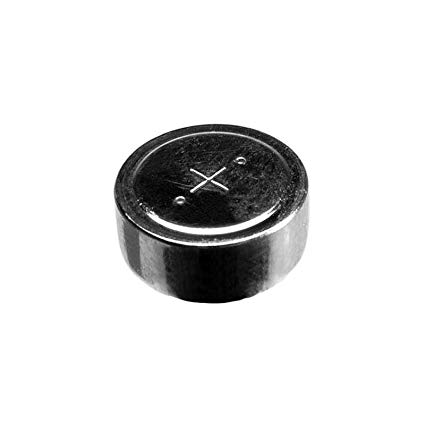
The LR52 / A640 is a mercury-free replacement for the RM640 / MR9 cell that was commonly used in cameras and carriage clocks. Mercury cells are now banned because of toxicity and environmental fears.
The LR52 / A640 cells produce 1.5 Volts, which is higher than the 1.35V produced by the original mercury cell. Most devices accommodate the small increase in voltage and function properly.
Replacement For the following: PX640A, A640PX, RM640, MR9, EN640A, EPX640A, PC640A, LR52, 1126A, PX640, EPX640, V640PX, H-N, E640N, MR52, NR52, 1126MP
RM640 Battery is compatible with the following models:
RM640, MR52, PX640A, 1126MP, EN640A, V640PX, 960-0374, PX640AB, RM640R, PC640A, A640PX, 1105M, RPX640, E640N, PX640, EPX640, KX640, EPX640A, E140, V640,
Where the Chinon 35EE seems like a near carbon-copy of the Konica C35, this little rangefinder doesn’t have much more than size in common with its forerunner than its size. In its features it’s like a scaled-down version of the Yashica Electro, right down to its lens barrel symbols and over-under LEDs.
Similar-looking to the 35EE and C35 but with a restyled body, plastic lens barrel, and advanced features like manual aperture and shutter release lock. That and the nice touches like a redesigned wind lever make me think this was aimed at a higher-end market than its predecessor at a time when rangefinders were losing out to AF compacts and SLRs in the marketplace.
Like on some other compact rangefinders, the aperture ring is next to the camera body and the focus ring is on the edge, which I found a little awkward. I missed having the focus tab that makes the C35 such an intuitive little shooter. This 35eeii had some leaky-battery induced electronic problems (see repair section below), but luckily the shutter fires at a default speed (1/500?) and the aperture is manual, so I had no problem taking pics with 400 speed film in daylight even without a working meter (see sample). When the meter is working, the camera utilizes 3 LEDs in the eyepiece to signify under-, over- and correct exposure.
What it lacks: PC sync terminal, manual aperture setting. Other than that it’s a great little shooter! Like its cousins the Chinon 35EE and Konica C35, lens is sharp, contrasty and colorful when stopped down, though soft wide open. Use a flash or fast film in lower light.
Repairs
‘Defrosted’ the battery chamber and adjacent wiring. Corrosion from leaky mercury batteries caused a frostlike growth that literally looked like a freezer that needed defrosting. A Q-tip dipped in vinegar softened the stuff, a toothpick did the rest. Carefully. That revealed the corrosion on the delicate contacts near the battery chamber. I removed the battery chamber (3 screws) and saw that the negative lead to the first of the brass contacts had completely disconnected… on both ends! So with my trusty dental picks I carefully cleaned up the contacts and soldered a new piece of wire from the battery chamber to the first brass tab. Carefully reassembled, then put two silver button batteries in the chamber, gapped with springs. I can’t believe it but it’s working! Over/underexposure LEDs, hot shoe, auto shutter… I was so happy I replaced the light seals immediately.
Tips & Tricks
Manual aperture plus aperture-priority autoexposure, over-under LEDs in the viewfinder (actually in the plastic frame right next to your eye!). Self-timer countdown LED on the front, the self-timer lever is in-column as on the Yashica Electro.
Battery was originally two mercury PX640, and my experience with the 640KA is that their voltage doesn’t stay constant enough to be proper replacements, better to adapt silver 1.5v button batteries and adjust the ASA accordingly (say, 2/3 to 1/2 of actual ASA).
Produced early 80s by Chinon Industries, Inc., Japan
Film type 135 (35mm)
Picture size 24mm x 36mm
Weight 12.4oz (351.5g)
Lens Chinon Chinonex Color lens 38mm 1:2.7-16
Filter size 46mm
Focal range 3.4′ to infinity
Shutter Chinon leaf shutter
Shutter speeds ?-1/500
ASA 25-800
Viewfinder coupled rangefinder
Exposure meter lens mounted CdS with over/under LEDs
Battery originally 2 x 1.3v PX640 mercury
Hotshoe
Shutter button lock lever
Self-timer
Fast-action wind lever
The Minolta Hi-Matic G was a quite compact viewfinder camera. Like the other Hi-Matics it had automatic exposure. And like other 1970s Hi-Matics it had the CdS window inside the filter ring and a hot shoe for the flash. With this camera Minolta overcame the "Electro Control" system which needed two batteries. Its CdS controlled exposure program set speed/aperture combinations from 1/30 sec./f2.8 to 1/650 sec / f14 . The focusing ring had four distance symbols. F-Stop and shutter speed were shown in the viewfinder.
Minolta’s Hi-matic series of compact cameras span more than 20 years of production and were usually rangefinders such as the well-regarded Hi-matic 7sII. However the series also gave rise to a few Point & Shoot (P&S) most notably the Hi-matic G launched in 1974.
Unlike some rival P&S like the Chinon 35 or Konica C35V that have clearly evolved from rangefinders, the Hi-Matic G was a completely new model with a different exposure system to its immediate rangefinder predecessor the Hi-Matic F. Some pundits have even queried if someone else had made it for minolta as it was so like many other P&S in the 70’s in classic chrome black styling. My one’s lens barrel had slight movement but this may have been a one of and it didn’t affect shots.
What ever’s the truth of its origins you do get a 4 element Minolta Rokkor lens which is sharp. This can be focused by using 4 zones on the top of the lens barrel like an Olympus Trip 35. However the camera is actually a smooth scale focus with distances printed beneath the barrel for more accurate shooting in low light. I quite like the option to switch but find in most cases with scale focus viewfinder your brain still tends to use the 0.8, 1.5, 3m and infinity model.
The rest is fairly typical for a 70’s Japanese compact rangefinder or P&S with the exception of a fairly wide f/14 smallest aperture. The lens barrel mounted CdS metering system automatically sets the camera exposure by a series of aperture shutter speed combos. These are displayed on a needle meter scale on the right hand side of the viewfinder. The shutter, aperture speeds are all industry standard and offer no surprises. There are no manual control other than turning from auto to a series of Guide Number(GN) settings for flash. There is no exposure lock if the meter thinks you are at risk over or under-exposing and there is no bulb setting (shame as it’s cable threaded).
The metering works well enough and was pretty typical for cameras for the era, Also typical it uses the now defunct 1.45v mercury px675 cell but a 1.4v zinc air 675za hearing aid battery (5 for a quid in Poundland) will suffice abet with more limited power time. The camera lacks a self timer. The viewfinder has usual frame and parallax markings but you’ll struggle to see you focus settings from it.
The main problem with the Hi-matic G is that it a pretty vanilla camera for the 70’s. It takes reasonable shots and it’s specs match its rival but that it. There are no standout features and no endearing/maddening quirks and there is the smallest f/14 aperture size. Does it offer more than the Olympus Trip 35 – no. In fact the Trip although on paper is more limited with just 2 shutter speeds works out better due to its marginally better optics and sensible weighting of its aperture to encourage good depth of field. Now many of my other P&S are equally clobbered by the Trip but they offer quirks or features that the minolta doesn’t. That said it really does nothing wrong per se.
They are widely available and with a bit of luck you can get for a tenner on eBay. Mines end up being sold there. Lightseals will need done but this is relatively easy to do and as ever watch out for battery corrosion. A lens cap is an indicator looked after. It was succeeded by the G2 which is an altogether more plasticky affair.
Type: viewfinder camera using zone focus symbols on the lens barrel.
Manufacturer: probably Minolta (some experts have doubts to say so because of comparable models of other brands)
Year of launch: 1974
Film: 35mm with speeds 25 to 400 ASA
Lens: Rokkor 1:2.8/38mm (4 elements)
Shutter: leaf shutter
Metering: CdS photo resistor
Dimensions: 116×71×53 mm
Weight: 375 g
The Fujica GER was a typical 1970s rangefinder camera. It had a 38mm/f2.8 lens and a CdS-controlled electromagnetical shutter with a good range of speeds from 2 sec. to 1/800 sec.. Flash photography was simplified by means of the guide number selector of the camera.
The exposure value of a metered scene can be locked by holding the shutter button half down, then re-framing the photo. This is very useful for backlit situations. Half pressing the shutter lights a small orange LED inside the viewfinder (as well as a red LED on the top plate), indicating that everything is ready and OK to take the photo. If the LED remains illuminated, the shutter speed is less than 1/30 of a second.
Battery test
Slightly press the shutter button when in the “A” position. A red LED in front of the hot shoe lights (and orange LED inside the viewfinder). Without batteries it is not possible to use this camera. The wind lever seems to be used as a switch.
Viewfinder
The frame lines represent the infinity and the other lines match with a distance of 1.5m. On the left is a flash symbol, this illuminates if the exposure requires a shutter speed less than 1/30 of a second. (flashgun or tripod required). The viewfinder is very slightly purple. The window rangefinder is yellow.
Flash Guide Number Ring
This is the worst part of this camera; it should be the aperture ring! The ring is marked:
GN m(metric) 8,9,16,18,28,40,56 (and “A” for auto). These represent flash guide numbers, WIKI tells us:
The guide number represents an exposure constant for a flash unit. For example, a guide number of 80 feet at ISO 100 means that a target 20 feet away will be correctly illuminated with an aperture of f/4 (80 = 20 × 4) using a sensitivity of ISO 100. So, if you wish to use a flashgun, you will need to know its power output as a guide number. You will then be able to set the GER’s number ring on the correct number to match the lens angle (38mm)\film speed\subject distance to give you a correct expose.
Exposure
With the flash guide number ring set on “A” the GER exposure is a fully automatic. The Cds cell, (small eye in front of the lens), ensures automatic adjustment from 4 seconds at f/2.8 up to 1/800 per sec at f/13 for a film sensitivity of 100 ASA. The Cds cell controls the Seiko ESB electronic shutter, which provides shutter speeds from 4 seconds to 1/800 per sec.
The shutter/aperture is made by two blades in shaped-V with curved edges. With the release, the shape of the hole is variable depending on the value of the aperture.
It is a circle (aperture at 2.8 from 4 seconds to 1/30) to a square with the curved edges in decreasing sizes from f/2.8 to f/13. Once the exposure time is reached the two shutter blades close. All this is controlled by innovative electronics, which has the merit of reducing the number of moving parts. In the viewfinder, when the pressure on the shutter button is, an orange LED (on the right) briefly lights up, indicating that everything is ready for a good shot. If this LED remains illuminated, it means that the shutter speed will be slow, too slow for a photo without a flash or tripod. The slower shutter speeds are below the 1/30 of a second, then a tripod or flashgun will be required.
The Canon Sure Shot Max was a 1991 model from Canon's very successful Sure Shot range. This compact 35mm film camera was known as the Prima 5 in continental Europe and Autoboy Mini in Japan.
his plastic-bodied, slim point and shoot from Canon appeared in 1991. Called the Autoboy Mini in Japan, and Prima 5 in Europe, it is a pretty sensible camera that does not try to do too much. With its 38mm f/3.5 lens, the Sure Shot Max is a compact AF camera that fits in a jacket pocket and can be ready for photography almost immediately. It has one odd little feature - you turn the camera on with the switch located on the lens bezel. With the lens retracted into the body, it sure does have a thin profile.
Lens: 38mm, f/3.5 with 3-point smart autofocus.
Auto-exposure with shutter speeds of 1/8-1/250s.
Integral flash. (Guide No: 9m at ISO 100.)
Auto-load, wind and rewind of DX-coded film.
Dimensions: 125x68x43mm.
Weight: 245g (with battery)
Power: One 3V CR123A lithium battery.
A version with an autodate function was available.
3 point smart AF, prefocus is enabled.
38mm f/3.5 lens (3 elements in 3 groups)
Shutter: Electromagnetic programmed shutter and aperture. Range of f/3.5 to f/22; 1/8 sec - 1/250 sec shutter speeds, all automatic.
Self-timer
Viewfinder: 85% coverage, parallax correction frame, OK to shoot indicator, flash-ready, red-eye reduction indicator, and close-up warning.
DX coded ISO setting from ISO 25-3200.
Flash: Built-in, Guide No. 9 (at ISO 100). Flash can be turned off. Red-eye reduction lamp.
Battery: 1 3V CR123A.
Film winding is automatic, rewind automatic at end of roll.
Weight: 245 grams w/battery; dimensions- 125 x 68 x 43mm
Tripod socket
The Premier PC600 is a nice black 35mm point-and-shoot plastic camera made by Premier. The shifter below its non-focusable F3.5 38mm lens opens or closes the shifting doors which protect the front elements of the lens and the reverse Galilean bright frame viewfinder. It's also the on/off switch of the camera. Below the built-in flash is another shifter to switch on the flash. A third shifter is the film speed selector to choose between ISO speeds 100(/200?), 400 and 1600. Between this selector and the lens is the small window of the CdS meter which maybe has some automatic exposure control function but at least controls the underenlightment signal. The automatic film advance works only after pressing the shutter release. Thus it's necessary to press the release button on the camera's top twice after laying in the film and closing the film chamber. Afterwards the release button has to be pressed just once for each exposure. Another feature on the top is the window of the mechanical exposure counter which is reset automatically after film rewind. The film rewind is activated when reaching the film end. On the back is the film chamber door with a little window to show the presence of a film. Above the door are the viewfinder ocular together with the flash ready lamp and the red underenlightment indicator LED which is activated bay half-pressing the shutter release. On the camera's bottom is the door for the battery chamber. The camera needs two AA batteries.
The Premier PC600 is a 35mm point-and-shoot camera made by Premier of Taiwan. It has a fixed-focus 38 mm f/3.5 lens. Below the lens is a switch which opens or closes the lens and viewfinder covers (it's also the on/off switch of the camera). Below the built-in flash is another switch for the flash. A third shifter is the film speed selector to choose between ISO speeds 100/200 (the same switch position), 400 and 1600. Between this selector and the lens is the small window of the CdS meter which presumably has some automatic exposure control function but at least controls the low-light warning signal, a red LED by the viewfinder eyepiece, which lights when the shutter release is half-pressed.
The film is advanced automatically after the shutter is released, and rewinds automatically when the end of the film is reached. The power advance is the only way to advance the film: thus it's necessary to press the release button on the camera's top twice during loading, after laying in the film cassette and closing the film chamber. There is a window in the film chamber door to show the presence (and type) of film. There is a frame counter window in the top of the camera; this resets automatically after the film is rewound and taken out. Above the door are the viewfinder eyepiece together with the flash ready lamp and the red low-light indicator LED which is activated by half-pressing the shutter release. The camera needs two AA batteries, which are loaded in the bottom of the camera.
The grip and back of the camera are black in every example seen. The front has been seen in black, as pictured here, silver and red.