Mostrar mensagens com a etiqueta Canon. Mostrar todas as mensagens

sábado, 18 de abril de 2020

Canon AT-1 (1976 - ~)

Canon AT-1 (1976 - ~)
#447
This photo is from the copy I own

History and technical features 

The AE-1 with shutter speed-priority AE and TTL metering became wildly popular in Japan and overseas.

However in a few overseas markets, the AE-1 had a high price tag. There were also many users who still preferred manual metering. In response to these people, the AT-1 was developed. It had the same body as the AE-1. It featured match-needle metering and TTL centerweighted averaging metering with CdS photocell. The camera could use the same accessories as the AE-1.

Source: Canon Camera Museum

Canon introduced the AT-1 in late 1976, about eight months after the immensely popular AE-1 made its debut. Both SLRs utilize the FD lens mount.

While outwardly the two models are near-twins, and share many accessories, the AT-1 was an export-only model offering cost-conscious buyers a cheaper alternative. Where the AE-1 offers shutter-priority autoexposure, the AT-1 is a pure match-needle, manual-exposure camera. Its viewfinder display is a simplified throwback to earlier match-needle SLRs: an analog needle floats to reflect a TTL reading of the scene brightness; and the user adjusts either aperture or shutter speed until the EV "lolipop" aligns with the needle position. There is no indication of either the selected aperture or shutter speed in the viewfinder.

Despite these appearances, the AT-1 is not a full-blown retro mechanical SLR: it is based on the innovative cost-cutting electronics of the AE-1. The shutter is electronically timed and entirely dependent on battery power. A 10 second self-timer with blinking LED indicator is activated by rotating a tab alongside the shutter release to its forward position. (Rather illogically, returning the tab to its normal position does not cancel the self-timer; instead it fires the shutter immediately.)

While never selling in the same numbers as the AE-1 or AE-1P, today an AT-1 offers photographers access to numerous inexpensive, used FD-mount lenses, in a body free from extraneous bells and whistles.

Source: camera-wiki.org


Specifications

Type: 35mm focal-plane shutter SLR camera
Picture Size: 24 x 36 mm
Normal Lens: Canon FD 50mm f/1.8 SC
Lens Mount: FD mount
Shutter: Four-axis, horizontal-travel focal-plane shutter with cloth curtains. X, B, 2, 1, 1/2, 1/4, 1/8, 1/15, 1/30, 1/60, 1/125, 1/250, 1/500, 1/1000 sec. All speeds controlled electronically. Built-in self-timer (with blinking LED).
Flash Sync: X-sync automatic-switching sync contacts with German socket and hot shoe.
Viewfinder: Fixed eye-level pentaprism. 0.82x magnification, 93.5% vertical coverage, 96.3% horizontal coverage. Split-image rangefinder encircled by microprism rangefinder at center of fresnel matte screen. Metering match needle, overexposure warning (also battery check indicator), and underexposure warning provided.
Exposure Control:  CdS cell for TTL full-aperture, match-needle centerweighted averaging metering. Metering range at ISO 100 and f/1.8 lens: EV 3 – 17. Film speed range from ISO 25 to 3200.
Power Source: One 4G-13 6 V mercury oxide battery or 4LR44 alkaline battery
Film Loading & Advance: Slotted take-up spool. Advances with camera-top lever’s 120 stroke (partial strokes enabled). Ready position at 30.
Frame Counter: Counts up. Resets automatically when camera back is opened.
Film Rewind: Camera-top crank
Dimensions & Weight: 141 x 87 x 48 mm, 590 g

Source: Canon Camera Museum


Model

Serial number 570051


Reference sites

camera-wiki.org

Canon Camera Museum


Manual

English manual

English booklet


Batteries


V28 PX 6V battery
Film


Pictures taken with this machine


Videos


domingo, 18 de agosto de 2019

Canon A-1 (1978-1985)

Canon A-1 (1978-1985)

#431
This photo is from the copy I own

History and technical features 

The Canon A-1 is an advanced level single-lens reflex (SLR) 35 mm film camera for use with interchangeable lenses. It was manufactured by Canon Camera K. K. (today Canon Incorporated) in Japan from April 1978 to 1985. It employs a horizontal cloth-curtain focal-plane shutter with a speed range of 30 to 1/1000 second plus bulb and flash synchronization speed of 1/60 second. It has dimensions of 92 millimetres (3.6 in) height, 141 millimetres (5.6 in) width, 48 millimetres (1.9 in) depth and 620 grams (22 oz) weight. Unlike most SLRs of the time, it was available in only one color; all black. The introductory US list price for the body plus Canon FD 50 mm f/1.4 SSC lens was $625, the camera was generally sold with a 30–40% discount (roughly $375 to $435).

The A-1 is a historically significant camera. It was the first SLR to offer an electronically controlled programmed autoexposure mode. Instead of the photographer picking a shutter speed to freeze or blur motion and choosing a lens aperture f-stop to control depth of field (focus), the A-1 has a microprocessor programmed to automatically select a compromise exposure based on light meter input. Virtually all cameras today have at least one program mode.

Beginning with the amateur level Canon AE-1 of 1976, there was a complete overhaul of the entire Canon SLR line. The 1970s and 1980s were an era of intense competition among the major SLR brands: Canon, Nikon, Minolta, Pentax and Olympus. Between 1975 and 1985, there was a dramatic shift away from heavy all-metal manual mechanical camera bodies to much more compact bodies with integrated circuit (IC) electronic automation. In addition, because of rapid advances in electronics, the brands continually leapfrogged each other with models having new or more automatic features, and less expensive components and assembly. The industry was trying to expand out from the saturated high-end professional market and appeal to the large mass of low-end amateur photographers keen to move up from compact automatic leaf shutter rangefinder cameras to the more "glamorous" SLR but were intimidated by the need to learn all the details of operating a traditional SLR.

The A-1 is the high technology standard bearer of the landmark Canon amateur level A-series SLRs. The other members of the A-series are the Canon AE-1 (released 1976), AT-1 (1977), AV-1 (1979), AE-1 Program (1981) and AL-1 (1982). They all use the same compact aluminum alloy chassis, but with differing feature levels and outer cosmetic acrylonitrile-butadiene-styrene (ABS) plastic panels. By sharing most major components, and an inexpensive horizontal cloth-curtain shutter, costs could be spread out over a larger production volumes. The A-1 represented Canon's bid to defeat Nikon through more features and the cheapest price.

The A-1 caused a sensation when it was released in early 1978. Most photographers were amazed at its advanced features, years ahead of the competition, but in the face of changing technology, not all comments were positive. Professional photographers worried about the long term reliability of its consumer-level mechanical and electronic components under heavy daily use, the relatively slow flash sync and top shutter speeds. Traditionalist photographers complained about an "excess" of automation ruining the art of photography, a criticism that was leveled at all of the newly automated cameras released in the 1980s. However, automation turned out to be the right way to entice many new amateur photographers on a budget, and paid off very well for Canon.

The Canon A-1 was a runaway best seller, as it offered new SLR buyers considerable features and value for the price. It was reliable for its day in amateur usage. But as competitors brought out their own programmed SLRs,[1] the A-1 began to show its age. This is especially true for its horizontal cloth-curtain shutter, viewfinder information display and autoflash control. The A-1 was due for replacement when the Canon T90 came out in 1985. Canon's abandonment of the FD lens mount for the EOS design also had a significant effect on demand for the A-1 on the used market. But it is still regarded as one of the most fascinating SLRs of its generation and many are still in regular use.

Source: en.wikipedia.org


Specifications

The A-1 accepts any lens with the Canon FD breech lock mount (introduced in 1971) or Canon New FD pseudo-bayonet mount (sometimes called the FDn mount, introduced 1979). It can also use most earlier FL lenses and some even older R (or Canomatic) series lenses, albeit with reduced functionality. This excludes all of Canon's EF bayonet mount autofocus lenses (introduced in 1987). During the late 1970s and 1980s, there were approximately 55 Canon FD lenses available for purchase. They ranged from a 7.5mm f/5.6 fisheye to an FD 800mm f/5.6 telephoto, and included lenses with maximum apertures to f/1.2 and a line of L-series lenses of exceptional quality. Accessories for the A-1 included the Canon motor drive MA (automatic film advance up to 5 frames per second), the Canon Databack A (sequential numbering or date stamping on the film), and the Canon Speedlight 155A (guide number 56/17 (feet/meters) at ASA/ISO 100) and Canon Speedlight 199A (guide number 98/30 (feet/meters) at ASA/ISO 100) electronic flashes.

The A-1 is a battery-powered (one 4LR44 or PX-28) microprocessor-controlled manual-focus SLR with manual exposure control or shutter priority, aperture priority or programmed autoexposure. A fifth mode is "stopped down AE", in which the aperture is closed and alterable by the photographer and the camera selects the shutter speed based on the actual light reading. This differs from aperture priority in which the aperture is not closed until a photograph is taken and the shutter speed is calculated based on the light measured through the fully open aperture. Stopped down AE existed so that old FL lenses could be used with at least some kind of AE, and was also useful for photomicroscopy, manual-aperture lenses, etc. The A-1 is the first SLR to have all four of the now standard PASM exposure modes. It has a viewfinder exposure information system using a six-digit, seven-segment per digit, red alphanumeric LED display on the bottom of the viewfinder to indicate the readings of the built-in centerweighted, silicon photocell light meter. The focusing screen also has Canon's standard split image rangefinder and microprism collar focusing help.

Source: en.wikipedia.org

  • Type:35mm focal-plane shutter SLR camera
  • Picture Size: 24 x 36 mm
  • Normal Lens: Canon FD 55mm f/1.2 SSC, FD 50mm f/1.4 SSC
  • Lens Mount: FD mount
  • Shutter: Four-axis, horizontal-travel focal-plane shutter with cloth curtains. X, B, 30, 15, 8, 4, 2, 1, 1/2, 1/4, 1/8, 1/15, 1/30, 1/60, 1/125, 1/250, 1/500, 1/1000 sec. All speeds controlled electronically. Built-in self-timer (with 2- and 10-sec. delay and blinking LED). Multiple exposures enabled with a lever. Electronic shutter release.
  • Flash Sync: X-sync automatic-switching sync contacts with German socket and hot shoe.
  • Viewfinder: Fixed eye-level pentaprism. 0.83x magnification, 93.4% vertical coverage, 95.3% horizontal coverage. Split-image rangefinder encircled by microprism rangefinder at center of fresnel matte screen. Eyepiece shutter provided. Six interchangeable focusing screens optional (installed by service personnel). The standard screen was later replaced by the brighter and sharper Laser Matte screen.
  • Viewfinder Information: Digital readout with 7-segment red LED for shutter speed, aperture, dedicated Speedlite flash-ready, manual settings, and warning displays.
  • Metering & Exposure Control: SPC for TTL full-aperture centerweighted averaging metering or TTL stopped-down metering. Exposure compensation range of 2 EV. AE lock provided. Five AE modes: Shutter speed-priority AE, aperture-priority AE, program AE, preset aperture-priority AE, and Speedlite AE (with dedicated Speedlite). The mode is set with a selector dial. Metering range at ISO 100 and f/1.4: EV -2 – 18. Film speed range from ISO 6 to 12800 in 1/3 steps.
  • Power Source: One 4G-13 6 V mercury oxide battery or 4LR44 alkaline battery. Battery check with button and blinking LED.
  • Film Loading & Advance: Slotted take-up spool. Advances with camera-top lever’s 120 stroke (partial strokes enabled). Ready position at 30.
  • Frame Counter: Counts up. Resets automatically when camera back is opened. Counts down during rewind.
  • Film Rewind: Camera-top crank
  • Dimensions & Weight:  141 x 92 x 48 mm, 620 g

Source: global.canon


Model

Serial number 1412230


Reference sites

en.wikipedia.org

global.canon

mir.com.my


Manual

English manual

Canon A-1 Repair Guide


Batteries

V28 PX 6V battery
Film


Kodak ColorPlus 200/24

Fujicolor C200/36


Pictures taken with this machine


Kodak ColorPlus 200/24 sample 1

Kodak ColorPlus 200/24 sample 2

Kodak ColorPlus 200/24 sample 3

Fujicolor C200/36 sample 1

Fujicolor C200/36 sample 2

Fujicolor C200/36 sample 3

Videos


quinta-feira, 27 de junho de 2019

Canon AE-1 Program (1981)

Canon AE-1 Program (1981)
#421
This photo is from the copy I own

History and technical features 

Five years after the original AE-1 was introduced, Canon brought out an excellent upgraded version in 1981, known as the AE-1 Program or AE-1P in short. The AE-1 Program was considered as one of the two most elegant looking A series bodies (the other was the Canon A-1 in 1977).

The AE-1 Program was certainly a worthy successor. It was packed with improved features, which were not found in its predecessor. Among the features was the Programmed AE, (first debut in the A-1) in addition to the Shutter-priority AE and manual override modes. It also has eight user interchangeable focusing screens, using the new laser matte types as well as some with extra bright laser matte technology developed for the flagship model, the New Canon F-1. It has a new, dedicated Power Winder A2 that has additional remote capability, but the camera still accepts the older Winder A and can even share the Canon A-1's Motor Drive MA for up to 4 fps burst rate for action photography.

It also accepts most of the accessories within the FD system, including Data Back A, macro accessories, A and G-type of Canon Speedlites for fully automated flash photography. All FD, New FD and FL lenses are usable with the AE-1P. Full aperture metering is only possible with the FD and New FD lenses. Stopped-down metering with the FL lenses.

As with the Canon A-1, the AE-1 Program was indeed, very popular and well received by consumers. Although there were some minor shortfalls in its design to make it a true classic, it was still a worthy camera among its class during the years of its availability, from early to the mid-80s.

Obviously, the AE-1 Program was a much easier camera to use as compared to the multi-mode Canon A-1. Although the A-1 has more features and functions to control exposure, those available on the AE-1 Program were actually improvements over what the A-1 has and it has a more simplified way in controlling exposure, which made the camera an easier model for beginners to use.

Source: mir.com.my


Specifications

Type: 35mm single-lens reflex (SLR) camera with electronically-controlled automatic exposure (AE) and focal-plane shutter.
Exposure Modes: Programmed AE, shutterspeed priority AE, AE flash photography with specified Canon electronic flash units, and manual override.
Format: 24 x 36mm.
Usable Lenses: Canon FD (for full-aperture metering) and Canon FL and non-FD (for stopped-down metering) series lenses.
Standard Lenses: FD 50mm f/1.2, FD 50mm f/1.4, FD 50mm f/1.8
Lens Mount: Canon breech-lock mount.
Dioptric Adjustment: Built-in eyepiece is adjusted to standard -1 diopter.
Focusing Screen: Standard split-image/microprism rangefinder. Seven other types of interchangeable screens are available optionally.
AE Mechanism: Electronically-controlled programmed AE and shutter-speed priority AE metering system using one IC and three LSl's with  .
Light Metering System: Through-the-lens (TTL), Center-Weighted Averaging by silicon photocell (SPC).
Meter Coupling Range: EV 1 (1sec. at f/1.4) to EV 18 (1/1000 sec. at f/16) with ISO/ASA 100 film and f/1.4 speed lens.
Exposure Memory: EV locked in when shutter button is pressed halfway and the AE lock switch is pressed once. Exposure is memorized as long as shutter button is pressed halfway.
Exposure Preview: By pressing shutter button or exposure preview switch.
Shutter: Cloth, focal-plane, 4-spindle, electronically-controlled. With shock and noise absorbers.
Mirror: Instant-return, with shock-absorber.
Film Speed Scale: ISO/ASA 12 - 3200.
Shutter Speed Selector Dial: 2 sec.- 1/ 1000 sec.. plus "PROGRAM" and "B" With guard.
Shutter Release Button: Two-step, electromagnetic shutter release button. Also serves as exposure preview switch. With lock, cable release socket, and finger rest.
Main Switch: Three positions: "A" "L," and "S." At "L" all active circuits are cut off as a safety feature. "S" position is for self-timer photography.
Self-timer: Electronically-controlled. Main switch set to"S."Activated by pressing shutter button. Ten-second delay with electronic "beep-beep" sound. Number of beeps emitted per second increases two seconds before shutter release. Cancellation possible.
Stop-down Lever: For depth-of-field preview (FD lens) or metering (non-FD lens or close-up accessories).
Power Source: One 6v alkaline-manganese (Eveready [UCAR] No. A544,IEC 4LR44) silver oxide (Eveready [UCAR] No. 544, IEC 4SR44, Duracell PX 28), or lithium (Duracell PX 28L) battery. Battery lasts about one year under normal use.
Battery Check: "Beep-beep" sound when pressing battery check button. Six or more beeps per second indicate sufficient power; three or fewer beeps per second indicate insufficient power.
Flash Synchronization: X synchronization at 1/60 sec.; M synchronization at 1/30 sec. or slower. Direct contact at accessory shoe for hot-shoe flash. PC socket (JIS-B type) with shock-preventive rim for cord-type flash. Accessory shoe has contact for normal automatic flash plus special contact for AE flash with dedicated Canon Speedlites.
Automatic Flash: Full AE flash photography with specified Canon Speedlites. Shutter speed set automatically. Aperture controlled automatically according to setting of flash when pilot lamp glows.
Back Cover: Opened with rewind knob. Removable, interchange with Databack A. With memo holder.
Film Loading: Via multi-slot take-up spool.
Film Advance Lever: Single-stroke 120° throw with 30° stand-off. Ratchet winding possible.
Frame Counter: Additive type. Automatically resets to "S" upon opening back cover. Counts backwards as film is rewound.
Film Rewind: With rewind button and crank
Other Safety Devices: Camera will not function when power level insufficient. Film winding impossible while shutter is in operation.

Source: mir.com.my


Model

Serial number 1617353


Reference sites

mir.com.my


Manual

English manual

AE-1 Program service manual


Batteries


V28 PX 6V battery

Film


Pictures taken with this machine


Videos


sexta-feira, 21 de junho de 2019

Canon A-1 (1978-1985)

Canon A-1 (1978-1985)
#420
This photo is from the copy I own

History and technical features 

The Canon A-1 is an advanced level single-lens reflex (SLR) 35 mm film camera for use with interchangeable lenses. It was manufactured by Canon Camera K. K. (today Canon Incorporated) in Japan from April 1978 to 1985. It employs a horizontal cloth-curtain focal-plane shutter with a speed range of 30 to 1/1000 second plus bulb and flash synchronization speed of 1/60 second. It has dimensions of 92 millimetres (3.6 in) height, 141 millimetres (5.6 in) width, 48 millimetres (1.9 in) depth and 620 grams (22 oz) weight. Unlike most SLRs of the time, it was available in only one color; all black. The introductory US list price for the body plus Canon FD 50 mm f/1.4 SSC lens was $625, the camera was generally sold with a 30–40% discount (roughly $375 to $435).

The A-1 is a historically significant camera. It was the first SLR to offer an electronically controlled programmed autoexposure mode. Instead of the photographer picking a shutter speed to freeze or blur motion and choosing a lens aperture f-stop to control depth of field (focus), the A-1 has a microprocessor programmed to automatically select a compromise exposure based on light meter input. Virtually all cameras today have at least one program mode.

Beginning with the amateur level Canon AE-1 of 1976, there was a complete overhaul of the entire Canon SLR line. The 1970s and 1980s were an era of intense competition among the major SLR brands: Canon, Nikon, Minolta, Pentax and Olympus. Between 1975 and 1985, there was a dramatic shift away from heavy all-metal manual mechanical camera bodies to much more compact bodies with integrated circuit (IC) electronic automation. In addition, because of rapid advances in electronics, the brands continually leapfrogged each other with models having new or more automatic features, and less expensive components and assembly. The industry was trying to expand out from the saturated high-end professional market and appeal to the large mass of low-end amateur photographers keen to move up from compact automatic leaf shutter rangefinder cameras to the more "glamorous" SLR but were intimidated by the need to learn all the details of operating a traditional SLR.

The A-1 is the high technology standard bearer of the landmark Canon amateur level A-series SLRs. The other members of the A-series are the Canon AE-1 (released 1976), AT-1 (1977), AV-1 (1979), AE-1 Program (1981) and AL-1 (1982). They all use the same compact aluminum alloy chassis, but with differing feature levels and outer cosmetic acrylonitrile-butadiene-styrene (ABS) plastic panels. By sharing most major components, and an inexpensive horizontal cloth-curtain shutter, costs could be spread out over a larger production volumes. The A-1 represented Canon's bid to defeat Nikon through more features and the cheapest price.

The A-1 caused a sensation when it was released in early 1978. Most photographers were amazed at its advanced features, years ahead of the competition, but in the face of changing technology, not all comments were positive. Professional photographers worried about the long term reliability of its consumer-level mechanical and electronic components under heavy daily use, the relatively slow flash sync and top shutter speeds. Traditionalist photographers complained about an "excess" of automation ruining the art of photography, a criticism that was leveled at all of the newly automated cameras released in the 1980s. However, automation turned out to be the right way to entice many new amateur photographers on a budget, and paid off very well for Canon.

The Canon A-1 was a runaway best seller, as it offered new SLR buyers considerable features and value for the price. It was reliable for its day in amateur usage. But as competitors brought out their own programmed SLRs,[1] the A-1 began to show its age. This is especially true for its horizontal cloth-curtain shutter, viewfinder information display and autoflash control. The A-1 was due for replacement when the Canon T90 came out in 1985. Canon's abandonment of the FD lens mount for the EOS design also had a significant effect on demand for the A-1 on the used market. But it is still regarded as one of the most fascinating SLRs of its generation and many are still in regular use.

Source: en.wikipedia.org


Specifications

The A-1 accepts any lens with the Canon FD breech lock mount (introduced in 1971) or Canon New FD pseudo-bayonet mount (sometimes called the FDn mount, introduced 1979). It can also use most earlier FL lenses and some even older R (or Canomatic) series lenses, albeit with reduced functionality. This excludes all of Canon's EF bayonet mount autofocus lenses (introduced in 1987). During the late 1970s and 1980s, there were approximately 55 Canon FD lenses available for purchase. They ranged from a 7.5mm f/5.6 fisheye to an FD 800mm f/5.6 telephoto, and included lenses with maximum apertures to f/1.2 and a line of L-series lenses of exceptional quality. Accessories for the A-1 included the Canon motor drive MA (automatic film advance up to 5 frames per second), the Canon Databack A (sequential numbering or date stamping on the film), and the Canon Speedlight 155A (guide number 56/17 (feet/meters) at ASA/ISO 100) and Canon Speedlight 199A (guide number 98/30 (feet/meters) at ASA/ISO 100) electronic flashes.

The A-1 is a battery-powered (one 4LR44 or PX-28) microprocessor-controlled manual-focus SLR with manual exposure control or shutter priority, aperture priority or programmed autoexposure. A fifth mode is "stopped down AE", in which the aperture is closed and alterable by the photographer and the camera selects the shutter speed based on the actual light reading. This differs from aperture priority in which the aperture is not closed until a photograph is taken and the shutter speed is calculated based on the light measured through the fully open aperture. Stopped down AE existed so that old FL lenses could be used with at least some kind of AE, and was also useful for photomicroscopy, manual-aperture lenses, etc. The A-1 is the first SLR to have all four of the now standard PASM exposure modes. It has a viewfinder exposure information system using a six-digit, seven-segment per digit, red alphanumeric LED display on the bottom of the viewfinder to indicate the readings of the built-in centerweighted, silicon photocell light meter. The focusing screen also has Canon's standard split image rangefinder and microprism collar focusing help.

Source: en.wikipedia.org

  • Type:35mm focal-plane shutter SLR camera
  • Picture Size: 24 x 36 mm
  • Normal Lens: Canon FD 55mm f/1.2 SSC, FD 50mm f/1.4 SSC
  • Lens Mount: FD mount
  • Shutter: Four-axis, horizontal-travel focal-plane shutter with cloth curtains. X, B, 30, 15, 8, 4, 2, 1, 1/2, 1/4, 1/8, 1/15, 1/30, 1/60, 1/125, 1/250, 1/500, 1/1000 sec. All speeds controlled electronically. Built-in self-timer (with 2- and 10-sec. delay and blinking LED). Multiple exposures enabled with a lever. Electronic shutter release.
  • Flash Sync: X-sync automatic-switching sync contacts with German socket and hot shoe.
  • Viewfinder: Fixed eye-level pentaprism. 0.83x magnification, 93.4% vertical coverage, 95.3% horizontal coverage. Split-image rangefinder encircled by microprism rangefinder at center of fresnel matte screen. Eyepiece shutter provided. Six interchangeable focusing screens optional (installed by service personnel). The standard screen was later replaced by the brighter and sharper Laser Matte screen.
  • Viewfinder Information: Digital readout with 7-segment red LED for shutter speed, aperture, dedicated Speedlite flash-ready, manual settings, and warning displays.
  • Metering & Exposure Control: SPC for TTL full-aperture centerweighted averaging metering or TTL stopped-down metering. Exposure compensation range of 2 EV. AE lock provided. Five AE modes: Shutter speed-priority AE, aperture-priority AE, program AE, preset aperture-priority AE, and Speedlite AE (with dedicated Speedlite). The mode is set with a selector dial. Metering range at ISO 100 and f/1.4: EV -2 – 18. Film speed range from ISO 6 to 12800 in 1/3 steps.
  • Power Source: One 4G-13 6 V mercury oxide battery or 4LR44 alkaline battery. Battery check with button and blinking LED.
  • Film Loading & Advance: Slotted take-up spool. Advances with camera-top lever’s 120 stroke (partial strokes enabled). Ready position at 30.
  • Frame Counter: Counts up. Resets automatically when camera back is opened. Counts down during rewind.
  • Film Rewind: Camera-top crank
  • Dimensions & Weight:  141 x 92 x 48 mm, 620 g

Source: global.canon


Model

Serial number 430864


Reference sites

en.wikipedia.org

global.canon

mir.com.my


Manual

English manual


Batteries

V28 PX 6V battery
Film
Fujicolor C200/36


Pictures taken with this machine


Canon A-1 (1978-1985) sample 1

Canon A-1 (1978-1985) sample 2

Canon A-1 (1978-1985) sample 3

Videos


quinta-feira, 13 de junho de 2019

Canon EOS 500N (1996-1999)

Canon EOS 500N (1996-1999)
#418
This photo is from the copy I own

History and technical features 

The Canon EOS 500N is also known as the EOS Rebel G in the Americas or the New EOS Kiss in Japan. Sometimes it's referred to as the EOS Kiss 2 as it followed the release of the EOS Kiss in Japan. This camera was released in 1996 and replaced the EOS 500. The Japanese version of the camera had the date back as standard. Its successor was the EOS-300 / REBEL2000 / Kiss III, released in 1999.

There are not too many changes in this model compared to the original. A few new features include compatibility with ETTL type flash. It still has the same 1/90 of a sec sync speed of the previous model, but when equipped with a Canon Speedlight such as the 380EX, 220EX it can be used at 1/2000 of a sec. Focus has improved a bit as as a AF assist light is now available. Auto Exposure Bracketing (AEB) can be use from -2 to ++2 in 1/2 stop increments. The command dial now has a easier to access night scene mode. The body is able to use the BP-8 vertical grip that can also accept four AA batteries.

Source: camera-wiki.org

The Canon EOS Rebel G is a perfectly competent, all-plastic 35mm SLR film camera that works with all Canon autofocus (EOS) lenses. It's a plastic camera with a plastic lens mount and a mirror prism, so it weighs nothing!

The Rebel G works great with IS lenses, and everything except Canon's EF-S lenses for small-format digital cameras (or the ancient FD lenses for manual focus cameras that went obsolete in 1986).

It first winds the film to the end, and then shoots the frames in reverse order. Its frame counter always shows you the frames remaining as it counts backwards.

All the hot lenses you buy for your 1D X and 5D Mark III, like the 14mm II, fisheyes and super-teles, all are 100% compatible — and you can buy a Rebel G body for one-half of one percent of the cost of a 1DS Mk III body.

The Rebel G was an inexpensive film camera. Its advantage is that it weighs nothing and works great. It shoots in all exposure modes and has a modern evaluative metering system.

Pop on a pro lens like the 16-35mm f/2.8 L II, and the package is still light enough to throw around your neck all day.

The Rebel G feels like a toy, but it's beauty is that it doesn't weigh anything. It's an easy camera to knock around all day, and brings back great results, even on Fuji Velvia 50 slide film.

The only gotha is that the finder is a super-light penta-mirror type, so the finder isn't quite as big, sharp or as contrasty as a pro film camera. If I shot this camera all day, every day I'd want a better finder for my convenience, but as a knock around camera, it's great.

This EOS Rebel G replaced the EOS Rebel XS (EOS 500 or EOS Kiss) which was introduced in September 1993. The 1993 EOS Rebel XS should not be confused with the Digital Rebel XS that was introduced in August 2008.

The EOS Rebel 2000 (EOS 300 or EOS Kiss III) replaced this EOS Rebel G in April, 1999.

Source: kenrockwell.com


Specifications

Name
Americas: EOS Rebel G
Japan: New EOS Kiss.
Rest of world: EOS 500N.

AF Sensors
3.

AF Assist light
Yes.

Finder
Mirror-prism.
0.7x magnification with 50mm lens.
90% coverage.
18.5mm eye relief.

Meter
Evaluative.
Averaging and PArtial available in other modes.
Rated LV 2-20 with f/1.4 lens.

ISO Range
ISO 25-5,000 (DX).
ISO 6-6,400 manually.

Shutter
1/2,000 - 30 seconds and Bulb in half-stops.
Fastest Shutter Speed with Flash (sync)
1/90.
(there is a trick FP mode with some flashes.)

Frame Rate
1 FPS.

Built-in Flash
Guide Number 39/12 (feet/meters at ISO 100).
Covers 28mm lens.

Cable Release Socket
NO.
You have to buy an expensive RS-60E3 cord.

Date Imprint
Available if you paid extra for the Quartz Date version.

Power
Two CR123A (DL123A) batteries.
Rated 85 24-exposure rolls without flash, 35 rolls with 50% flash, and 17 rolls with 100% flash, all at 68ºF (20ºC).
The date back, if you get it, uses a CR2025.

Colors
Pro black or gag-me silver paint.

Size
5.7 x 3.6 x 2.4" (145.7 x 92 x 61.9mm), WHD.

Weight
14.1 oz (400g) with batteries.
13.05 oz. (370g), naked and stripped of batteries.

Price
59,000 Yen (body only) at introduction in 1996.

Introduced
September 1996.

Replaced
By the Rebel 2000 in 1999.

Accessories:
GR-80TP Grip, which unfolds as a mini tripod.
EP-EX15 eyepiece extender makes the eyepiece poke out further and adds 15mm to the eye relief, but reduces the size of the finder image to 0.5x.
E Diopters.
RS-60E3 dedicated cable release.
BP-8 External AA Battery Pack.
EX Series flashes (speedlites).
EH8-L (Rebel G and small lens) and EH-8LL (with longer lens) never-ready cases.
Source: kenrockwell.com

Model

Serial number 1615580


Reference sites

camera-wiki.org

kenrockwell.com


Manual

English manual


Batteries

2 CR123A battery

Film
Fujicolor C200/36

Pictures taken with this machine


Canon EOS 500N sample 1

Canon EOS 500N sample 2

Canon EOS 500N sample 3

Videos


quinta-feira, 11 de abril de 2019

Canon AE-1 (1976-1984)

Canon AE-1 (1976-1984)
#410
Esta fotografia é do exemplar que possuo

Características

The Canon AE-1 is a 35mm film SLR camera with shutter-priority automatic exposure and manual override, produced by Canon in Japan and produced between 1976-1984.

By using a microprocessor, Canon was able to simplify the design, and by using a highly automated production process, they were able to keep costs low. The result was one of the first affordable TTL autoexposure cameras to hit the market. After its introduction in 1976, the Canon AE-1 quickly became a very popular camera worldwide. The AE-1 was replaced a few years later by the AE-1 Program.

Fonte: Camerapedia


Especificações

Lens: Canon FD 50mm f/1.4 SC
Mount: Canon FD breech-lock mount, accepts New FD (FDn) lenses also; filter thread: 52mm
This is the Standard lens, other normal lens is Canon FD 50mm f/1.4 SSC. There are many Canon lenses for the camera
Aperture: up to f/22, setting: ring and scale on the lens for manual setting
Focus range: 0.6-10m +inf
DOF pre-view: button on the right of the lens flange
Lens release: press the silver button on the lens and turn to anti-clockwise
Focusing: manual, via Canon standard split image rangefinder with microprism collar
Shutter: cloth focal plane electronic shutter travelled horizontally, speeds: 2-1/1000 +B; setting : dial on left of the top plate
Shutter release: on the top plate, w/ cable release socket, w/ lock lever, L means the shutter locked; when on A, pressing half way, the meter is readable in the finder
Cocking lever: 120° stroke (partial strokes enabled). Ready position at 30°.
Canon Winder A optional for power winding
Frame counter: counts up, auto-reset, on the top plate
Viewfinder: fixed eye-level SLR pentaprism, split-image rangefinder encircled by microprism rangefinder at center with a fresnel matte screen. Exposure meter needle, aperture scale, over-exposure warning zone, stopped-down aperture metering needle and battery check indicator, and under-exposure warning LED and Manual control (M) signal are visible
Exposure meter: center-weighted CdS meter with shutter-priority automatic exposure, full-aperture TTL metering
Film speed range: 25-3200 ASA; setting: lift the knurled ring on the winding button and then set. If the speeds dial turns when you setting the ASA, turn it to B or 1000.
Metering range: EV 1-18 at 100 ASA/ISO
Exposure setting: shutter priority auto; set to A, while pressing the AE lock button on the lens turn the aperture ring of the lens; needle pointing along a vertical f-stop scale on the right side of the viewfinder. Shutter release lock lever must be on A.
Manual: TTL stopped-down match needle manual metering
Back-light control switch: silver button, on the right of the lens flange
Exposure compensation range: +1.5 EV.
Exposure preview switch: black button, on the right of the lens flange
Re-wind lever: folding cranck, on right of the top plate
Re-wind release: small knob on the bottom plate
Flash PC socket: Flash sync 1/60, auto-switching
Hot-shoe: the dedicated flash units are Speedlites
Self-timer: release lock lever sets to S , then release the shutter, the red LED blinks when self timer working; before the shutter release, you can cancel it by pressing the battery check button
Back cover: hinged, remowable, w/ memory slot
Engraving on the bottom plate: Canon, Japan
Tripod socket: ¼"
Strap lugs
Body: metal; Weight: 798g (with standard lens)
Battery: 4LR44 6V battery or 4x LR44 1.5 V batteries
Attention: the camera is fully battery dependant
Battery chamber: on front of the camera
Battery check: black button beside the re-wind lever. If the battery is in very good condition, in the viewfinder, metering needle stays below the index near 5.6. If it stays on index, it is in low condition and over the index the battery must be replaced.
On/off switch: shutter release lock lever must be on L
The winder terminals and coupling sockets are in the bottom plate.
Serial no. on the top plate
Date code: inside the film spool compartment, eg. R 217 means the production year 1977 and month.

Fonte: Camerapedia


Modelo

A minha possui o n.º de série 3786137. lente possui o n.º de série 1548249.

É o terceiro exemplar que possuo.


Sítios de referência

Camerapedia

Canon date codes: bobatkins.com


Manual

Manual em inglês

Service and Repair Guide


Baterias
6V battery
Filme


Fotografias tiradas com esta máquina


Vídeos


domingo, 24 de março de 2019

Canon Canonet QL19 (1965)

Canon Canonet QL19 (1965)
#408
This photo is from the copy I own

History and technical features 

A sibling of the QL 17, the QL 19 used the same lens as the original Canonet and was priced 3,000 yen less than the QL 17.

The QL (Quick Loading) feature was Canon’s unique way to load film quickly. All you had to do was align the edge of the film leader with the specified mark on the camera and close the camera back. The film winding arm with hard rubber pads then grabbed and wound the film around the take-up spool.

Source: global.canon

Handsome. Stylish. Solid. This camera has just about anything you could want in a vintage rangefinder, except that it’s not the GIII QL17. Methinks a 1:1.9 is pretty nice, though of course 1:1.7 is slightly better; also instead of 6 elements in 5 groups, this lens — the same one as on the original Canonet — has 5 elements in 4 groups. Still pretty sharp although perhaps not as contrasty as some. Besides the lens, the specs are much the same as the QL17, noting that this is the first generation (early 1965) before the Seiko shutter version (late 1965) and the smaller ‘New QL19’ (1971). Not to mention the later GIII model (1972). Yeesh. This must be where Apple gets its infamous hardware naming scheme. (Ouch.)

It’s significantly larger than the ‘new’ QL series like the GIII QL17 and has a bit more heft to it. In fact it’s as wide as the K1000, though it doesn’t have the SLR feel that the slightly smaller and lighter Yashica Electro does – the difference I think being the prominence of the lens (the 1.7 Yashinon is pretty big glass). The other difference is that like the later Auto S2 and Hi-Matic 7s this camera works in manual or automatic mode, meaning that you can use it without a battery if you don’t need the meter, as long as the shutter blades aren’t stuck!

Source: mattsclassiccameras.com


Specifications

Type: 35mm Lens Shutter rangerfinder camera with shutter speed-priority EE
Picture Size: 24 x 36 mm
Normal Lens: Canon SE 45mm f/1.9 (5 elements in 4 groups)
Shutter: Copal SV; B, 1 to 1/500 sec. Built-in self-timer. Flash sync enabled with M-X switchable German socket.
Viewfinder: Coincidence rangefinder integrated with reversed Galilean viewfinder. Automatic parallax correction with projected frames and marked finder. 0.7x magnification. Viewfinder bottom features aperture scale (f/1.9 – f/16) and match needle correct exposure window/exposure warning indicator.
Exposure Meter and EE: CdS comb-controlled shutter speed-priority EE. Metering range of EV 2.5 – 19 (at ISO 100). Film speed range of ISO 25 – 400. Manual exposure enabled by disabling AUTO.
Power Source One 1.3 V MP mercury cell
Film Loading & Advance: After opening camera back, film leader is aligned at mark then advanced to first frame with Quick Loading (QL) system. Advances with camera-top lever. (120° single stroke)
Frame CounterCounts up. Resets automatically when camera back is opened.
Film Rewind: Camera-top crank
Dimensions & Weight 140 x 79 x 33 mm, 800 g

Source: global.canon

Produced 1965 Canon Camera Co., Japan
Film type 135 (35mm)
Picture size 24mm x 36mm
Weight 24.2oz (686.1g)
Lens Canon SE 45mm 1:1.9
Focal range .8m to infinity
Filter size 55mm
Shutter Copal SV
Shutter speeds B, 1-1/500 automatic or manual
Viewfinder coupled rangefinder
Exposure meter lens mounted CdS with viewfinder needle (aperture)
Auto EV range 2.5-19 at ISO 100
ASA range 25-800
Battery 1.3v mercury (RM1 1st model, 625PX second model)
Canon Quick Load (QL) film loading system
Accessory shoe, PC sync
Fast-action wind lever

Source: mattsclassiccameras.com


Model

First model


Reference sites

global.canon

mattsclassiccameras.com


Manual

English manual


Batteries
RM1 1.3v battery


Film


Pictures taken with this machine


Videos

terça-feira, 18 de dezembro de 2018

Canon EOS 3000 (1999)

Canon EOS 3000 (1999)
#397
This photo is from the copy I own

History and technical features 

A compact, lightweight, low-priced SLR camera. Successor to the EOS5000, but with greatly expanded basic functions. The camera incorporates the Mode Dial and most other basic features of the EOS Kiss/EOS REBEL XS/EOS500 and includes six-zone evaluative metering linked to three focusing points. In addition, the flash is linked to the measurement point so that during shooting the flash out-put level is constantly adjusted for optimum exposure control. For reasons of cost, the flash unit is manual pop-up/retractable head type. The EOS3000 is compatible with system accessories for the Kiss and New Kiss. The high-quality design has a feel of genuine elegance.

Source: global.canon

The EOS 3000 is an autofocus SLR for 35mm film introduced by Canon in 1999. It was sold as the EOS 88 in Asia. (It was not sold in the US.) The pentamirror viewfinder and manually-activated popup flash helped keep this a lower-cost model; but a full range of autoexposure modes were included, including off-the-film flash exposure setting. Film transport is motorized and the camera requires two 3-volt CR123 lithium batteries to operate.

Source: camera-wiki.org


Specifications

Type: 35mm focal-plane shutter, multi-mode AF SLR camera
Normal Lens: Canon EF lenses
Picture Size: 24 x 36 mm (panorama image approximately 13 x 36 mm using panorama adapter PA-1000) (Japanese model only)
Lens Mount: EF mount
AF System: TTL-SIR (TTL secondary image phase differential detection). AF modes: One-shot AF, One-shot AF/Predictive AI servo AF automatic switching, and manual focus. Multi-BASIS (1+1 array). AF operating range EV1.5-18 (ISO 100). AF in-focus indicators: LCD indicator inside the viewfinder, plus in-focus beeper (tone on/off selection is available in the Creative Zone).
Shutter: Vertical travel, focal plane electronic shutter. 1/2000-30 sec. in 1/2-stop increments, Bulb. X-sync at 1/90 sec. (hot shoe). In shutter-priority AE and manual exposure control mode; electronic dial provides 1/2- stop increments shutter speed setting. In other modes: Shutter speed is set automatically by the camera. Built-in electronic self-timer. Camera-shake warning in Full Auto and IS mode.
Viewfinder: Fixed eye-level pentamirror. 0.7x Magnification and 90% coverage horizontally and vertically.
Viewfinder Information: On the screen: Center AF mark, wide AF frame, and partial metering circle. Below the screen (seven-segment LCD display): Shutter speed (with camera-shake and out-of-range warnings) and aperture. Below the screen (LCD mask indicators): AE lock, red-eye reduction, flash charge completed, flash-use warning for low-light (blinking), exposure indicators (in 1/2-stop increments), AE exposure compensation amount, manual exposure, red-eye reduction lamp progress, AF in-focus (blinks if AF fails), manual in-focus.
Exposure Compensation: Manual setting ±2 EV in 1/2-steps. Operating range EV2-20 (ISO 100, f/1.4).
External LCD Information: Aperture, ISO mark, shutter-speed (ISO film speed/battery-check (bc) indicator, battery check level), exposure indicator (in 1/2-stop increments, ±2 stops) (exposure compensation amount/metered manual/red-eye reduction lamp), film status (loaded/not loaded/AL failure), film counter (multiple exposure setting/multiple exposures count (counts down)/beeper setting/self-timer operation (count down)), self-timer, beeper, red-eye reduction, multiple exposure
Metering & Exposure Control: Composite SPC for TTL full-aperture metering (six-zone evaluative metering and partial metering :9.5% of viewfinder at center). Picture-taking modes: Intelligent program AE (program shift enabled), Shutter speed- priority AE, Aperture-priority AE, Full-auto mode (intelligent AE), four Programmed Image Control modes (Portrait/Night Scene/Close-up/Sports), Auto-DEP, TTL program flash AE, A-TTL program flash AE, metered manual. AE lock enabled (button- operated). ISO film speed range: ISO 25-5000 in 1/3-stop increments, set automatically with DX code. ISO 6-6400 in 1/3-stop increments manual settings. Multiple exposures: Max nine multiple exposures (cancels automatically at completion or manually before completion). Exposure Compensation: Manual setting ±2 EV in 1/2-stop increments. Metering range: EV2-20 (ISO 100, f/1.4).
Built-in Flash: Retractable, located on pentamirror hump. TTL auto flash control. Off-the-film metering (linked to three weighted focusing points). Measurement Conditions Creative mode: Fires automatically when flash is up. Full auto/Image select mode: Fires automatically when flash is up, under low-light or backlit conditions. Flash Sync Speed Program AE: Automatically set to 1/90 sec Shutter priority AE, Manual: Set as needed at 1/90 or slower (in 1/2-stop increments). Aperture priority AE: Automatically set from 30 to 1/90 seconds Daylight sync available, red-eye reduction lamp provided (also functions as AF assist beam lamp) Guide number: 12 (ISO 100) With External Flash: External flash has priority, built-in flash operation disabled. EZ/E series strobe: A-TTL autoflash. EX series strobe, ML-3: TTL autoflash
Autodate Feature: No date; month, day, year; day, month, year; year, month day (Japan and QD models only)
Power Source: Two 3V CR123A or DL123A lithium batteries
Film Loading & Advance: Align film leader at mark, then close the camera back for prewind loading. Film rewinds as each shot is exposed. Built-in motor for automatic winding/rewinding. Film advance: Automatic. Single-frame and continuous (1 fps). Automatically rewinds film leader into cartridge when designated number of frames have been exposed (midroll rewind available).
Frame Counter: Counts down on external LCD panel (counts up during prewinding)
Dimensions & Weight: 145 x 92 x 61.9mm, 345 g (QD model: 360 g)

Source: global.canon


Model

Serial number 3716638


Reference sites

camera-wiki.org

global.canon


Manual

English manual


Batteries

2 CR123A battery

Film
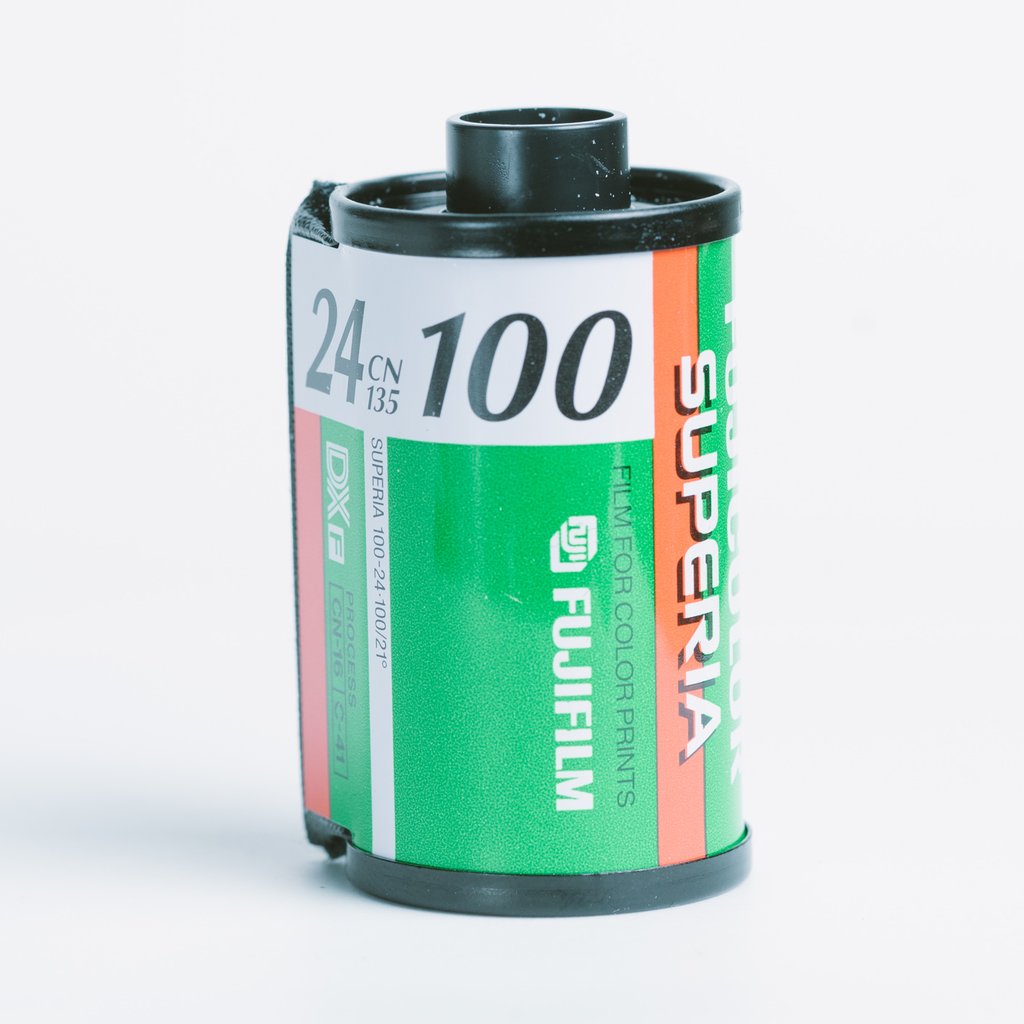
Fujifilm Fujicolor Superia 100/24


Pictures taken with this machine


Canon EOS 3000 sample 1

Canon EOS 3000 sample 2

Canon EOS 3000 sample 3

Videos


domingo, 4 de novembro de 2018

Canon AE-1 (1976-1984)

Canon AE-1 (1976-1984)
#390
Esta fotografia é do exemplar que possuo

Características

The Canon AE-1 is a 35mm film SLR camera with shutter-priority automatic exposure and manual override, produced by Canon in Japan and produced between 1976-1984.

By using a microprocessor, Canon was able to simplify the design, and by using a highly automated production process, they were able to keep costs low. The result was one of the first affordable TTL autoexposure cameras to hit the market. After its introduction in 1976, the Canon AE-1 quickly became a very popular camera worldwide. The AE-1 was replaced a few years later by the AE-1 Program.

Fonte: Camerapedia


Especificações

Lens: Canon FD 50mm f/1.4 SC
Mount: Canon FD breech-lock mount, accepts New FD (FDn) lenses also; filter thread: 52mm
This is the Standard lens, other normal lens is Canon FD 50mm f/1.4 SSC. There are many Canon lenses for the camera
Aperture: up to f/22, setting: ring and scale on the lens for manual setting
Focus range: 0.6-10m +inf
DOF pre-view: button on the right of the lens flange
Lens release: press the silver button on the lens and turn to anti-clockwise
Focusing: manual, via Canon standard split image rangefinder with microprism collar
Shutter: cloth focal plane electronic shutter travelled horizontally, speeds: 2-1/1000 +B; setting : dial on left of the top plate
Shutter release: on the top plate, w/ cable release socket, w/ lock lever, L means the shutter locked; when on A, pressing half way, the meter is readable in the finder
Cocking lever: 120° stroke (partial strokes enabled). Ready position at 30°.
Canon Winder A optional for power winding
Frame counter: counts up, auto-reset, on the top plate
Viewfinder: fixed eye-level SLR pentaprism, split-image rangefinder encircled by microprism rangefinder at center with a fresnel matte screen. Exposure meter needle, aperture scale, over-exposure warning zone, stopped-down aperture metering needle and battery check indicator, and under-exposure warning LED and Manual control (M) signal are visible
Exposure meter: center-weighted CdS meter with shutter-priority automatic exposure, full-aperture TTL metering
Film speed range: 25-3200 ASA; setting: lift the knurled ring on the winding button and then set. If the speeds dial turns when you setting the ASA, turn it to B or 1000.
Metering range: EV 1-18 at 100 ASA/ISO
Exposure setting: shutter priority auto; set to A, while pressing the AE lock button on the lens turn the aperture ring of the lens; needle pointing along a vertical f-stop scale on the right side of the viewfinder. Shutter release lock lever must be on A.
Manual: TTL stopped-down match needle manual metering
Back-light control switch: silver button, on the right of the lens flange
Exposure compensation range: +1.5 EV.
Exposure preview switch: black button, on the right of the lens flange
Re-wind lever: folding cranck, on right of the top plate
Re-wind release: small knob on the bottom plate
Flash PC socket: Flash sync 1/60, auto-switching
Hot-shoe: the dedicated flash units are Speedlites
Self-timer: release lock lever sets to S , then release the shutter, the red LED blinks when self timer working; before the shutter release, you can cancel it by pressing the battery check button
Back cover: hinged, remowable, w/ memory slot
Engraving on the bottom plate: Canon, Japan
Tripod socket: ¼"
Strap lugs
Body: metal; Weight: 798g (with standard lens)
Battery: 4LR44 6V battery or 4x LR44 1.5 V batteries
Attention: the camera is fully battery dependant
Battery chamber: on front of the camera
Battery check: black button beside the re-wind lever. If the battery is in very good condition, in the viewfinder, metering needle stays below the index near 5.6. If it stays on index, it is in low condition and over the index the battery must be replaced.
On/off switch: shutter release lock lever must be on L
The winder terminals and coupling sockets are in the bottom plate.
Serial no. on the top plate
Date code: inside the film spool compartment, eg. R 217 means the production year 1977 and month.

Fonte: Camerapedia


Modelo

A minha possui o n.º de série 1886762. lente possui o n.º de série 133918.

Foi fabricada em outubro de 1978 uma vez que possui o código interno S1035. Ver Canon date codes: bobatkins.com

É o segundo exemplar que possuo.


Sítios de referência

Camerapedia

Canon date codes: bobatkins.com


Manual

Manual em inglês


Baterias
6V battery


Filme
Fujifilm Fujicolor Superia 100/24


Fotografias tiradas com esta máquina

Canon AE-1 sample 1

Canon AE-1 sample 2

Canon AE-1 sample 3

Vídeos